California Car Insurance Requirements & Minimum Limits 2026

Mastering statutory driver licensing regulations and highway laws ensures first-time test success.
Quick Answer & Key Takeaways
California modernized its mandatory auto insurance limits under Senate Bill 1107 (effective 2025/2026): 1) NEW 30/60/15 STATUTORY MINIMUMS: $30,000 bodily injury liability per person (up from $15,000), $60,000 bodily injury liability per accident (up from $30,000), and $15,000 property damage liability (up from $5,000). 2) MANDATORY PROOF: Proof of financial responsibility must be carried in the vehicle or displayed electronically on a smartphone. 3) PENALTIES FOR UNINSURED DRIVING: $500 to $1,000 fines, vehicle impoundment, and mandatory SR-22 certification under CVC § 16029.
- Senate Bill 1107 Enacted: Mandatory 30/60/15 liability limits replace California's outdated 1967 standards.
- Electronic Proof Permitted: California drivers may present digital insurance cards on smartphones during traffic stops.
- Form SR-1 Accident Reporting: Accidents causing injury or over $1,000 property damage require state filing within 10 days.
- Low-Income Program (CLCA): Income-eligible drivers can access state-sponsored 10/20/3 policies.
Operating a motor vehicle in California requires strict adherence to the state's Financial Responsibility Law. For over 55 years, California operated under outdated 1967 statutory minimums. Under Senate Bill 1107, California established modernized mandatory auto insurance coverage tiers that every new, renewing, and commercial driver must maintain.
New California Liability Minimums Under Senate Bill 1107
All automobile liability insurance policies issued, amended, or renewed in California must meet or exceed the updated statutory benchmarks defined under California Insurance Code Section 11580.1b:
- $30,000 for Bodily Injury or Death (Single Person): The maximum amount your insurance carrier pays for medical treatment, lost wages, or wrongful death for one individual injured in an accident where you are at fault.
- $60,000 for Bodily Injury or Death (Total per Accident): The maximum aggregate payout across all injured parties combined if two or more people are hurt in a single collision.
- $15,000 for Property Damage: The maximum coverage amount to repair or replace damaged vehicles, municipal traffic lights, guardrails, or roadside structures caused by your vehicle.
Breakdown of the Mandatory 30/60/15 Coverage Rule
Liability insurance protects other roadway users from financial loss when you are legally at fault. It does not cover damage to your own vehicle:
- Collision Coverage (Optional but Recommended): Pays to repair your own vehicle after an accident, regardless of who caused the collision. Lenders require this on financed or leased vehicles.
- Comprehensive Coverage (Optional): Protects your vehicle against theft, vandalism, windshield cracks, falling trees, earthquake damage, or hitting an animal.
- Uninsured/Underinsured Motorist (UM/UIM): Protects you and your passengers if you are struck by a hit-and-run driver or an uninsured motorist. In California, carriers must offer this coverage in writing, and you must sign an explicit waiver to decline it.
Statutory Fines & License Suspension for Driving Uninsured
Under California Vehicle Code (CVC § 16028 and CVC § 16029), driving without active insurance is a serious misdemeanor-level infraction that impacts your driving record under California license point systems:
- First-Offense Financial Penalties: Fines ranging from $500 to $1,000, plus mandatory county penalty assessments that often double the final court fee.
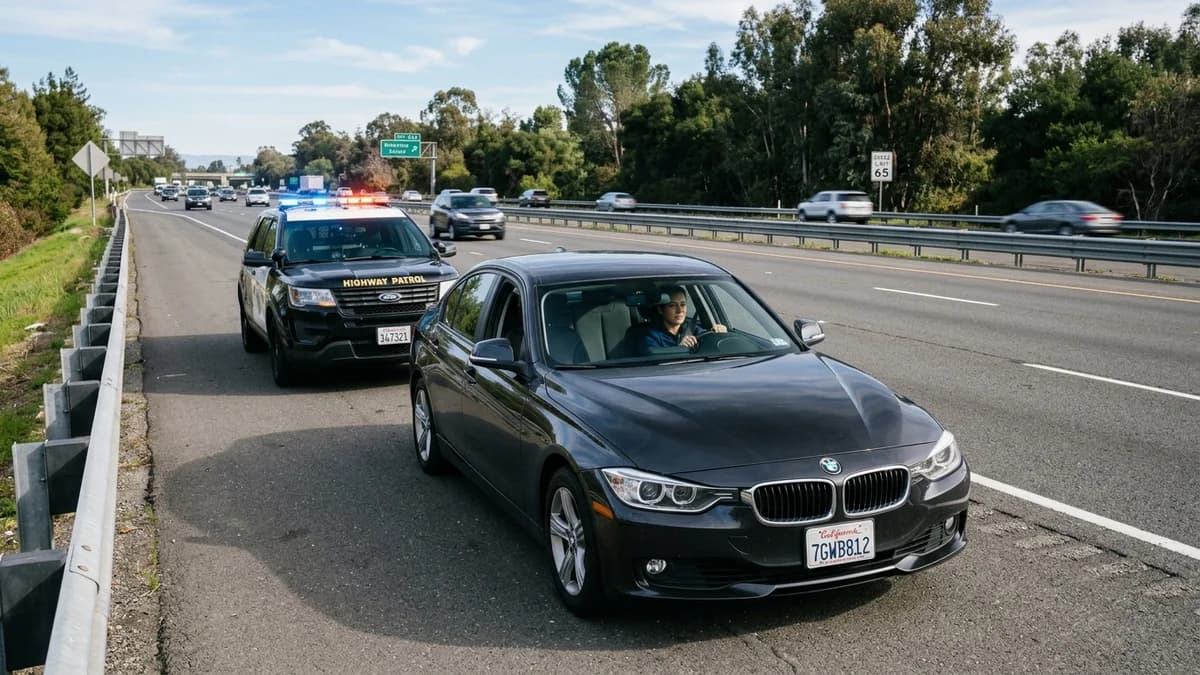
- Vehicle Impoundment (CVC § 22651): Law enforcement officers are legally authorized to impound uninsured vehicles on the spot during a traffic stop.
- Mandatory SR-22 Filing: Reinstating your driver's license after an uninsured suspension requires filing an official Certificate of Financial Responsibility (Form SR-22) for three consecutive years, significantly increasing your insurance premiums.
Mandatory Form SR-1 Accident Reporting Thresholds
Following the correct post-accident response steps is legally critical in California. Many drivers mistakenly believe that informing their insurance company fulfills their statutory reporting duties:
- 10-Day Statutory Filing Window: Under CVC § 16000, you must submit an official Form SR-1 (Report of Traffic Accident Occurring in California) to the California DMV within 10 days.
- $1,000 Damage Trigger: Mandatory reporting applies if property damage to any vehicle exceeds $1,000, or if any person suffers bodily injury or death under California DMV licensing rules, regardless of fault.
- Automatic Suspension for Non-Filing: Failure to file Form SR-1 within 10 days results in mandatory suspension of your driver's license under CVC § 16004.
California Low Cost Automobile Insurance Program (CLCA)
To ensure low-income residents can legally afford auto coverage, the state established the California Low Cost Automobile Insurance Program (CLCA) under California Insurance Code Section 11629.7:
- Reduced Statutory Minimums: CLCA policies carry modified liability limits of $10,000 for single bodily injury, $20,000 for total bodily injury, and $3,000 for property damage (10/20/3).
- Income Eligibility: Household income must fall within 250% of the federal poverty guidelines.
- Vehicle Value Cap: The insured motor vehicle must have a fair market value of $25,000 or less.
California Auto Insurance Liability Limits Comparison Table
The following matrix summarizes the historical progression, current 2026 mandates, and future scheduled increases for California auto liability coverage:
| Coverage Category | Historic Limits (1967–2024) | Current 2026 Mandate (SB 1107) | Future 2035 Scheduled Limit |
|---|---|---|---|
| Bodily Injury (Per Person) | $15,000 | $30,000 | $50,000 |
| Bodily Injury (Per Accident Total) | $30,000 | $60,000 | $100,000 |
| Property Damage Liability | $5,000 | $15,000 | $25,000 |
| Low-Cost Program (CLCA) | 10/20/3 ($3,000 PD) | 10/20/3 ($3,000 PD) | Statutory Review |
Interactive Knowledge Check
Question: Under California Senate Bill 1107, what is the mandatory minimum property damage liability limit required for all standard private motor vehicle policies?
Authoritative Sources & Regulatory References
Content and statutory guidelines in this guide are verified against official state vehicle codes, federal transportation standards, and authoritative regulatory documentation:
- California DOICalifornia Department of Insurance (CDI) Mandatory Minimum Automobile Liability Limits(California Department of Insurance)
- California LegislatureCalifornia Vehicle Code (CVC) Division 7: Financial Responsibility Laws (CVC § 16000 - 16078)(California Vehicle Code)
- California LegislatureCalifornia Insurance Code (CIC) Section 11580.1b & Senate Bill 1107 Statutes(California State Senate)
96% of people found this article helpful.
Click a star to add your vote
84 votes • average 4.86 out of 5
Official 2026 DMV Practice Tests by State
Select your state to practice real exam questions based on the latest 2026 driver handbook.
Ready to Pass the DMV Test on Your First Try?
Practice real 2026 DMV questions with instant answer explanations, simulated timers, and pass-guarantee study guides.
Start Free Practice TestRecommended Driver Guides
What to Do Immediately After a Car Accident: The 7-Step Driver Checklist

California DMV Permit Test 2026: Passing Score & Requirements