DOT Medical Exam and Commercial Driver Physical Card Requirements
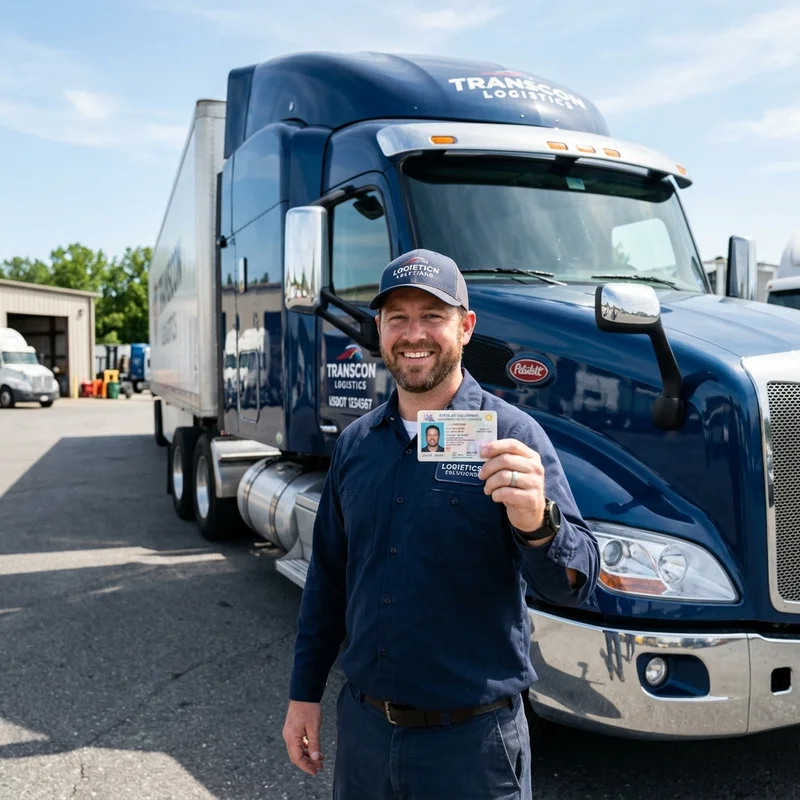
Federal regulations require commercial drivers to pass a comprehensive DOT physical examination to obtain and maintain an active Medical Examiner's Certificate.
Quick Answer & Key Takeaways
Under federal FMCSA law (49 CFR Part 391), all commercial drivers operating vehicles over 10,000 lbs in interstate commerce must pass a DOT Medical Exam conducted by a physician listed on the National Registry of Certified Medical Examiners (NRCME). 1) EXAM COMPONENTS: Tests visual acuity (minimum 20/40 in each eye), hearing (forced whisper test at 5 feet), blood pressure (must be below 140/90 for a 2-year card), and urinalysis (checks for protein/glucose indicating diabetes or kidney damage). 2) MEDICAL EXAMINER'S CERTIFICATE (MEC): Issued as Form MCSA-5876 (the 'DOT Medical Card'), valid for up to 24 months. 3) MANDATORY SELF-CERTIFICATION: Drivers must upload their active medical card to their state DMV; if a medical card expires for even 1 day, the state DMV automatically downgrades your CDL to a non-commercial Class C license.
- Certified Medical Examiner Required: Exams must be performed strictly by doctors on the official FMCSA NRCME registry.
- Blood Pressure Thresholds: BP below 140/90 grants a full 2-year card; 140–159/90–99 grants a 1-year card; above 180/110 causes immediate medical disqualification.
- Urine Dipstick Test: Not a drug test; screens for blood, protein, and sugar as markers for uncontrolled diabetes or organ failure.
- Immediate CDL Downgrade: Failing to submit an updated medical card before expiration causes your state DMV to instantly cancel commercial driving privileges.
Why the DOT Physical Is Mandatory: 49 CFR Part 391 Explained
Piloting an 80,000-pound combination semi-truck down a crowded interstate requires peak physical stamina, rapid reflexes, and uninterrupted consciousness.
A sudden medical emergency—such as a heart attack, diabetic coma, or epileptic seizure behind the wheel—can result in catastrophic multi-vehicle highway pileups.
Under FMCSA 49 CFR § 391.41, all commercial drivers must be certified medically qualified by a licensed healthcare professional listed on the National Registry of Certified Medical Examiners (NRCME).
The 4 Core Medical Checkpoints: Vision, Hearing, BP & Urinalysis
During your 45-minute DOT physical, the certified medical examiner conducts four mandatory baseline evaluations:
- Vision Evaluation: Must demonstrate at least 20/40 visual acuity in each eye separately and both eyes together (with or without corrective eyeglasses/contacts), a horizontal field of vision of at least 70 degrees, and the ability to distinguish traffic signal colors (red, green, amber).
- Hearing Test: Must perceive a "forced whisper" voice in the better ear at a distance of at least 5 feet (or pass a standard audiometric hearing aid test).
- Urinalysis Dipstick: Note that this clinical urinalysis is not a DOT drug screen; it checks specific gravity, blood, glucose, and protein to detect undiagnosed kidney dysfunction and uncontrolled diabetes.
- Neurological & Cardiovascular Examination: Checks for spinal disc herniations, limb tremors, vascular murmurs, and lung airflow capacity.
Blood Pressure Tiers: Stage 1, Stage 2 & 3-Month Temporary Cards
Blood pressure (BP) readings directly determine how long your Medical Examiner's Certificate (MEC Form MCSA-5876) remains valid:
- Normal (Under 140/90 mmHg): Qualifies for the maximum 2-Year Medical Card.
- Stage 1 Hypertension (140–159 / 90–99 mmHg): Issued a 1-Year Medical Card. Blood pressure must be monitored annually.
- Stage 2 Hypertension (160–179 / 100–109 mmHg): Issued a one-time 3-Month Temporary Card to allow the driver to seek antihypertensive medication from their primary physician to reduce BP below 140/90.
- Stage 3 Hypertension (180/110 mmHg or higher): IMMEDIATE DISQUALIFICATION. The driver cannot legally operate a commercial vehicle until blood pressure is lowered below 140/90.
Disqualifying Conditions: Sleep Apnea, Diabetes, and Heart Disease
Certain chronic health conditions require specialized medical compliance:
- Obstructive Sleep Apnea (OSA): Drivers with high Body Mass Index (BMI >35) or neck circumference >17 inches may be referred for a sleep study. Drivers diagnosed with sleep apnea must show CPAP compliance data (using the machine at least 4 hours per night on 70% of nights).
- Insulin-Treated Diabetes: Under the 2018 FMCSA revised rule, insulin-dependent drivers can drive commercially by having their treating endocrinologist complete the Insulin-Treated Diabetes Mellitus Assessment Form (MCSA-5870) showing stable glucose control.
- Epilepsy & Seizures: Individuals with an active clinical diagnosis of epilepsy are disqualified from interstate commercial driving.
CDL Self-Certification: Non-Excepted Interstate (NI) vs. Intrastate
Every CDL holder must formally declare their commercial driving status with their state DMV:
- Non-Excepted Interstate (Category 1 / NI): Operates across state lines for commercial haulers. Requires maintaining an active DOT Medical Card on file with the DMV at all times.
- The Automatic Downgrade Trap: If your medical card expires on June 1st and you fail to upload your renewed card by June 2nd, the state DMV will instantly revoke your commercial privileges, downgrading your license to a standard Class C car license. You cannot drive a truck until you re-certify.
DOT Physical Standards & Medical Card Durations Table
| Health Metric | Passing Standard | Medical Card Duration Issued |
|---|---|---|
| Optimal Blood Pressure | < 140/90 mmHg | 2 Years (Maximum) |
| Stage 1 Blood Pressure | 140–159 / 90–99 mmHg | 1 Year |
| Stage 2 Blood Pressure | 160–179 / 100–109 mmHg | 3 Months (One-Time Temporary) |
| Vision Acuity | 20/40 in each eye & both eyes | Standard tier (Restricts to corrective lenses if needed) |
| Forced Whisper Hearing | Perceive whisper at ≥ 5 feet | Pass / Fail standard |
Interactive Knowledge Check
Question: What happens to a commercial driver's CDL if their DOT Medical Examiner's Certificate (Medical Card) expires and they fail to submit an updated physical to their state DMV?
Authoritative Sources & Regulatory References
Content and statutory guidelines in this guide are verified against official state vehicle codes, federal transportation standards, and authoritative regulatory documentation:
- FMCSAPhysical Qualifications for Drivers and Medical Examinations (49 CFR § 391.41)(Federal Motor Carrier Safety Administration)
- FMCSANational Registry of Certified Medical Examiners (NRCME)(National Registry of Certified Medical Examiners)
- DOTMedical Examiner’s Certificate (Form MCSA-5876) and Self-Certification Categories(United States Department of Transportation)
96% of people found this article helpful.
Click a star to add your vote
90 votes • average 4.80 out of 5
Official 2026 CDL Practice Tests by State
Select your state to practice real Commercial Driver's License (CDL) exam questions based on the latest 2026 commercial handbook.
Ready to Pass Your CDL Permit Test on the First Try?
Practice real 2026 commercial driving questions with instant air brake explanations, combination vehicle dynamics, and pass-guaranteed study guides.
Start Free CDL Practice TestRecommended Driver Guides

How to Get Your Commercial Learner’s Permit (CLP): Step-by-Step Requirements
CDL Class A vs. Class B vs. Class C: Gross Vehicle Weight Rating (GVWR) Decoded