The "No-Zone": Semi-Truck Blind Spots and How to Share the Road Safely
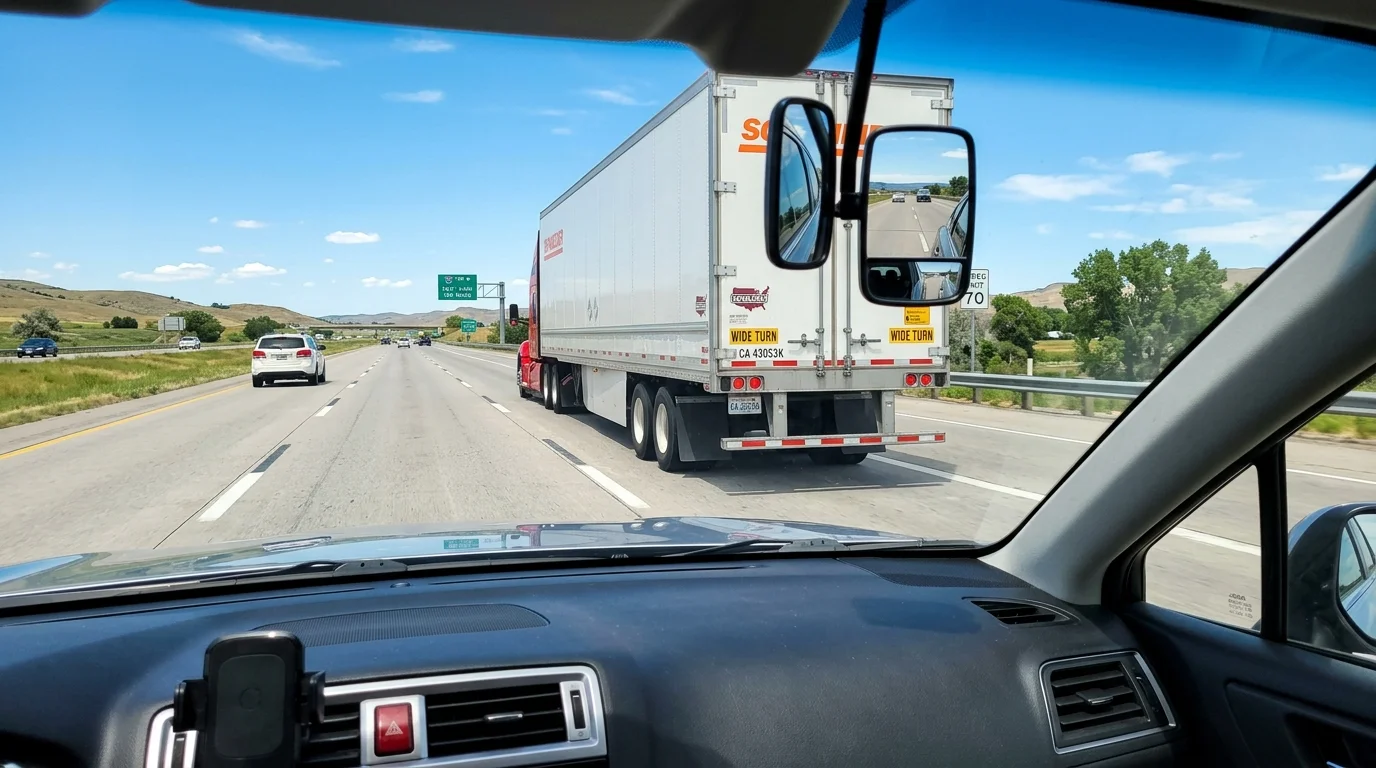
Commercial semi-trucks possess 4 immense No-Zones where smaller passenger vehicles become completely invisible to the truck driver.
Quick Answer & Key Takeaways
The 'No-Zone' represents the four massive blind spot areas surrounding commercial 18-wheel tractor-trailers: 1) FRONT NO-ZONE: Extends 20 feet directly in front of the truck cab. 2) REAR NO-ZONE: Extends 200 feet directly behind the trailer. 3) RIGHT-SIDE NO-ZONE: The most dangerous blind spot, spanning across 2 full traffic lanes along the right flank. 4) LEFT-SIDE NO-ZONE: Extends alongside the cab door. Universal rule: If you cannot see the truck driver's face in their side mirror, the truck driver CANNOT see you.
- Right Side Is the Largest: The right-side blind spot is twice as large as the left, spanning across two entire highway lanes.
- Rear Blind Spot: Extends 200 feet behind the trailer; tailgating a truck leaves you zero forward visibility.
- Wide Right Turns: Large trucks must swing wide to the left before making a tight right turn; never squeeze into the right-side gap.
- Wind Buffeting: Passing a commercial truck creates aerodynamic air pressure waves that can pull your car toward the trailer.
What Is the "No-Zone"? Commercial Truck Visibility Limits
Commercial 18-wheel tractor-trailers weigh up to 80,000 pounds and measure over 70 feet in length.
Because truck cabs sit high above the road and have no inside rearview center mirror, commercial trucks possess four immense visual dead zones known as the "No-Zone."
According to the Federal Motor Carrier Safety Administration (FMCSA), in over 70% of fatal two-vehicle collisions involving a large truck and a passenger car, the crash occurs because the smaller passenger car was lingering in one of the truck’s four No-Zones.
The 4 Massive Blind Spots of an 18-Wheeler Decoded
Understanding the exact boundaries of each No-Zone is critical for defensive highway driving:
The Front No-Zone (20 Feet of Blind Hood Clearance)
Because the truck driver sits high up behind a massive diesel engine hood, a blind zone extends at least 20 feet directly in front of the truck's front bumper.
The Danger: If you cut in front of a semi-truck immediately after passing and brake, the trucker cannot see your car and, due to truck braking distance physics (525+ feet to stop), will crush your vehicle from behind.
The Rear No-Zone (200 Feet of Tailgating Risk)
The blind zone directly behind a solid steel box trailer extends up to 200 feet (approx. 20 car lengths).
- Zero Forward View: Tailgating behind a semi completely blocks your view of traffic jams, debris, and brake lights ahead.
- Under-Ride Crash Risk: If the truck brakes suddenly, an undersized following distance cushion causes your passenger car to slide directly beneath the rear trailer frame (an underride crash), shearing off the vehicle's roof pillars.
The Right-Side No-Zone (Spans 2 Full Traffic Lanes)
The right side of a commercial truck is its LARGEST and MOST DANGEROUS blind spot.
Because the trucker sits on the far-left side of the cab, the right-side blind spot extends diagonally backward along the entire length of the trailer and spans across two full traffic lanes to the right. Never pass a commercial truck on the right-hand side.
The Left-Side No-Zone (Below the Cab Door)
While smaller than the right side, a blind spot extends along the left flank starting directly below the driver’s side mirror and extending along the tractor drive wheels.
The Golden Rule: "If You Can’t See Their Mirrors, They Can’t See You"
Defensive driving instructors teach one simple universal rule:
If you cannot see the truck driver's face in their side mirror, the truck driver CANNOT see you!
Wide Right Turns & Off-Tracking: The Squeeze-Play Danger
Because long trailers experience severe "off-tracking" (the rear trailer wheels follow a much tighter arc than the front tractor wheels), trucks making a right turn must first swing wide to the left to clear the curb.
The Fatal Mistake: An untrained driver sees the truck move left and tries to pass or squeeze into the open right lane space. As the truck completes the right turn, the trailer sweeps right, crushing the passenger car against the curb. Always stay back and let the truck complete its turn.
How to Pass a Semi-Truck Safely (Managing Wind Turbulence)
Follow these four passing rules:
- Pass on the Left Only: The left blind spot is much smaller and truckers expect overtakes on the left.
- Maintain a Firm Grip on the Wheel: As you pass alongside the front cab, crosswinds and aerodynamic air pressure displacement will push your vehicle slightly outward and then pull it inward; hold a steady steering line.
- Do Not Linger Alongside: Complete your pass promptly without loitering in the side No-Zone.
- Return to Lane Only When Both Headlights Appear: Look in your center rearview mirror; wait until you can see both commercial headlights of the truck cab in your center mirror before signaling and returning to the lane.
Interactive Knowledge Check
Question: Which of a commercial semi-truck's four No-Zone blind spots is the LARGEST and MOST DANGEROUS?
Authoritative Sources & Regulatory References
Content and statutory guidelines in this guide are verified against official state vehicle codes, federal transportation standards, and authoritative regulatory documentation:
- FMCSACommercial Motor Vehicle Blind Spots and the No-Zone(Federal Motor Carrier Safety Administration)
- NHTSALarge Truck Crash Causation Study and Passenger Vehicle Interactions(National Highway Traffic Safety Administration)
- ATASharing the Road with Commercial Tractor-Trailers(American Trucking Associations)
88% of people found this article helpful.
Click a star to add your vote
98 votes • average 4.42 out of 5
Official 2026 CDL Practice Tests by State
Select your state to practice real Commercial Driver's License (CDL) exam questions based on the latest 2026 commercial handbook.
Ready to Pass Your CDL Permit Test on the First Try?
Practice real 2026 commercial driving questions with instant air brake explanations, combination vehicle dynamics, and pass-guaranteed study guides.
Start Free CDL Practice TestRecommended Driver Guides
Following Distance Rules: The 3-Second Rule vs. The 4-Second Weather Rule

Stopping Distance Physics: Perception Time, Reaction Distance, and Braking Distance
