Highway Hypnosis: Causes, Symptoms, and How to Stay Alert on Monotonous Roads
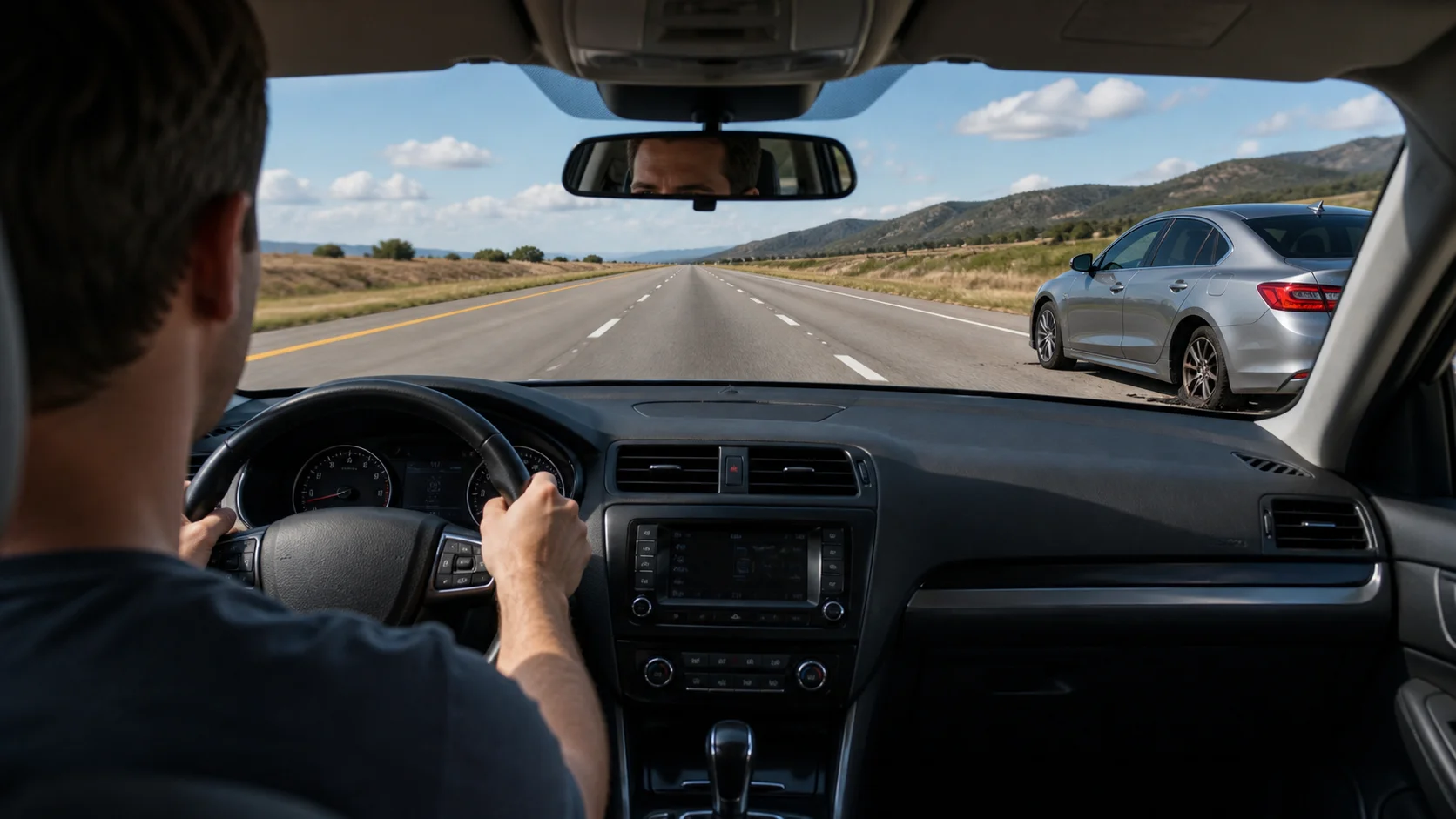
Highway hypnosis is an altered cognitive trance state induced by monotonous roads, causing drivers to navigate for miles with zero conscious memory.
Quick Answer & Key Takeaways
Highway Hypnosis (also known as 'White Line Fever') is an altered mental state in which a driver navigates a motor vehicle for long distances in a safe, automated manner but with ZERO conscious recollection of having done so. Unlike drowsy driving (where a person physically falls asleep), highway hypnosis occurs when your conscious brain enters an automaticity trance due to visual monotony (staring at unbroken dashed yellow/white lines and flat desert terrain). If an unexpected emergency occurs (such as a deer leaping or sudden stopped traffic), a hypnotized driver's perception and reaction time is drastically delayed.
- Conscious Amnesia: You suddenly realize you don't remember driving the last 15 miles or passing three highway exits.
- Automaticity State: The subconscious brain steers the vehicle, but higher-order emergency hazard perception is completely offline.
- Visual Fixation: Staring directly at the center line or the tailgate of the vehicle ahead triggers the trance within 20–30 minutes.
- How to Break It: Shift your eye gaze every 5 seconds, drop cabin temperatures by 4 degrees, adjust your seat angle, and take a 15-minute break every 2 hours.
What Is Highway Hypnosis? The Neurology of "White Line Fever"
Have you ever been driving on a rural interstate late at night and suddenly realized you have no recollection of driving the last 10 or 20 miles?
This common and terrifying cognitive phenomenon is known as Highway Hypnosis (or "White Line Fever").
According to neurological sleep studies published by the CDC, the human brain enters a state of automaticity: your subconscious motor cortex continues to execute routine steering and throttle inputs, while your conscious executive brain powers down into an awake daydreaming trance.
Highway Hypnosis vs. Drowsy Driving: The Dangerous Difference
While both impair driver safety, they operate through different neurological mechanisms:
- Drowsy Driving: Physical exhaustion where your eyelids droop, micro-sleeps occur (nodding off for 2–3 seconds), and the brain physically demands sleep.
- Highway Hypnosis: You are physically awake and not necessarily tired; rather, extreme visual monotony and sensory deprivation have hypnotized your cognitive focus.
In both cases, your perception reaction time is delayed by up to 200%, turning a routine braking event into a fatal high-speed collision.
The Top 5 Warning Signs You Are Slipping into a Driving Trance
- Missing Highway Exits or Road Signs: Realizing you blew past your intended exit 5 miles ago without noticing the signs.
- Fixed, Unblinking Stare: Your eyes remain frozen on the yellow line or tailgate ahead rather than scanning mirrors.
- Drifting Across Lane Markers: Hitting the vibrating rumble strip on the highway shoulder.
- Delayed Reaction to Speed Limit Changes: Continuing at 70 mph after entering a 55 mph zone.
- Heavy Cognitive Fog & Mind Wandering: Snapping out of a deep internal daydream with a jolt of panic.
Why It Happens: Long Straightaways & Sensory Deprivation
Highway hypnosis thrives under specific environmental conditions:
- Long, flat, uncurving highway corridors (e.g. I-80 through Nebraska or I-10 through West Texas).
- Continuous white noise from tires on pavement and engine humming.
- Driving at night through pitch-black surroundings with only painted reflective lines illuminated by headlights under headlight laws.
7 Proven Countermeasures to Stay Alert on Long Highway Stretches
- The 5-Second Eye Sweep Rule: Shift your visual focus every 5 seconds—look far ahead, check left side mirror, check rearview mirror, check dashboard gauges. Never fixate on one spot.
- Cool Cabin Temperatures: Blast cool air through the vents; warm cabins induce sleep hormones.
- Adjust Your Posture: Tilt your backrest forward one notch to engage core muscles.
- Engage with Talk Radio / Podcasts: Listening to talk shows, audiobooks, or dynamic conversations forces cognitive processing, whereas monotonous repetitive music lulls you into trance.
- Chew Crunchy Snacks or Gum: Chewing stimulates trigeminal nerve alertness in the brain.
- The 2-Hour / 100-Mile Rest Rule: Under AAA Foundation guidelines, stop every 2 hours or 100 miles, exit the car, stretch, and walk for 5 minutes.
- Take a 20-Minute Power Nap: If exhaustion sets in, pull into a lit rest area, lock doors, and sleep for 20 minutes.
Alertness Strategy Comparison Chart
| Method | Mechanism | Effectiveness Duration |
|---|---|---|
| 5-Second Mirror Sweep | Breaks visual fixation and restores situational awareness | Continuous / Best Practice |
| Cold Air Blast | Stimulates nervous system via thermal shock | Short-Term (10–15 Minutes) |
| Interactive Audio (Podcasts/Talk) | Engages executive cognitive brain function | Long-Term (1–2 Hours) |
| 20-Minute Rest Stop Nap | Clears adenosine sleep pressure in brain | Deep Reset (3–4 Hours) |
Interactive Knowledge Check
Question: What is the most effective scanning technique to prevent entering a state of highway hypnosis on long, monotonous interstate drives?
Authoritative Sources & Regulatory References
Content and statutory guidelines in this guide are verified against official state vehicle codes, federal transportation standards, and authoritative regulatory documentation:
- NHTSADriver Fatigue and Alertness Management on Rural Highways(National Highway Traffic Safety Administration)
- CDCSleep and Alertness Medicine: Automaticity in Monotonous Driving Tasks(Centers for Disease Control and Prevention)
- AAA FoundationLong-Distance Driving Safety and Highway Monotony Guidelines(AAA Foundation for Traffic Safety)
90% of people found this article helpful.
Click a star to add your vote
229 votes • average 4.54 out of 5
Official 2026 DMV Practice Tests by State
Select your state to practice real exam questions based on the latest 2026 driver handbook.
Ready to Pass the DMV Test on Your First Try?
Practice real 2026 DMV questions with instant answer explanations, simulated timers, and pass-guarantee study guides.
Start Free Practice TestRecommended Driver Guides

The Zipper Merge Method: Why Merging at the Last Second Is Actually Faster & Safer
Left Lane Camping Laws: States That Fine Drivers for Cruising in the Passing Lane