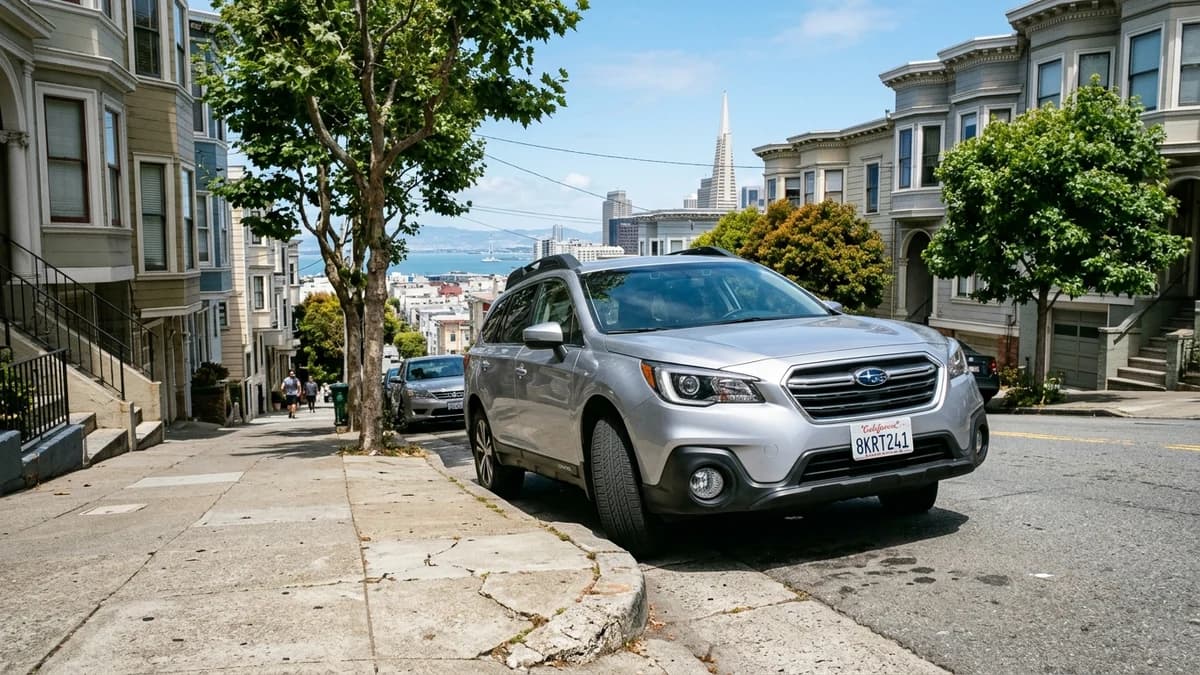
Legal Parking Distances: How Far Must You Park from Hydrants, Crosswalks, and Stop Signs?
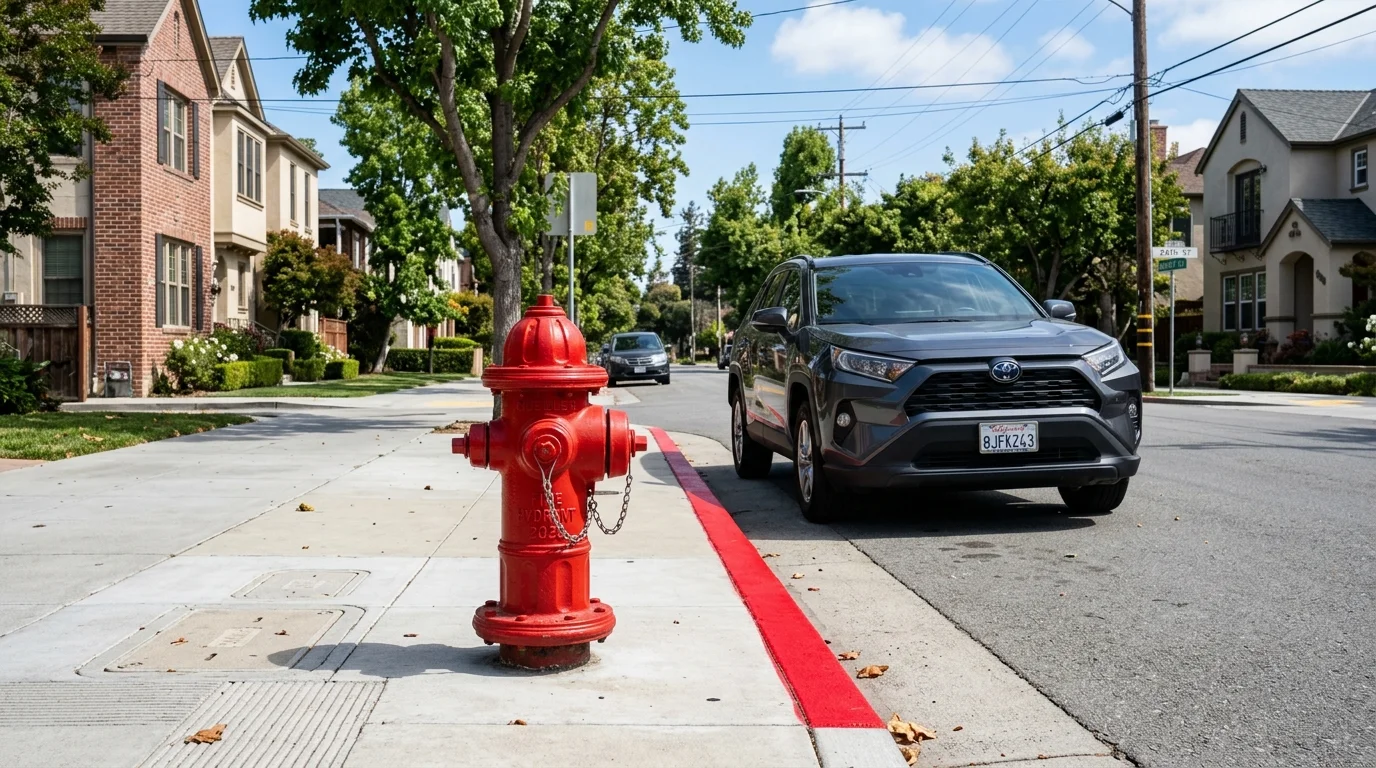
State vehicle codes mandate precise clearance buffers around hydrants, crosswalks, and traffic signs to protect sightlines and emergency access.
Quick Answer & Key Takeaways
On every state DMV written exam and street parking zone, you must memorize 5 mandatory parking clearance distances: 1) FIRE HYDRANT: 15 feet. 2) CROSSWALK / INTERSECTION: 20 feet (unless curbs are marked otherwise). 3) STOP SIGN / YIELD SIGN / TRAFFIC SIGNAL: 30 feet on the approach. 4) RAILROAD TRACK: 50 feet from the nearest rail. 5) DISTANCE FROM CURB: Tires must be within 18 inches (1.5 feet) of the curb when parallel parked.
- Fire Hydrant: 15 feet minimum clearance (parking within 15 ft risks having fire hoses smashed through your car windows in an emergency).
- Stop Sign / Signal: 30 feet minimum on the approach side so tall parked vehicles don't block the stop sign from oncoming drivers.
- Crosswalk Daylighting: 20 feet clearance prevents parked cars from obstructing sightlines to crossing pedestrians.
- Curb Distance: Maximum 18 inches from the curb during parallel parking (exceeding 18 inches fails your DMV road test).
Why Parking Distance Laws Exist: Sightlines and Emergency Access
Every DMV written knowledge test in the United States contains questions testing exact statutory parking distance numbers. These measurements are not arbitrary municipal rules; they are engineered buffer zones codified under California Vehicle Code § 22500 and the Uniform Vehicle Code to maintain two life-safety priorities:
- Unobstructed Driver Sightlines ("Daylighting"): Large SUVs, vans, and pickup trucks parked right at the corner of an intersection create physical blind spots that hide crossing pedestrians under pedestrian right-of-way rules and obscure octagonal STOP signs from approaching traffic.
- Rapid Emergency Response Access: Fire engines, ladder trucks, and paramedics require immediate physical clearance around water supply hydrants and intersection turning radiuses.
The 5 Must-Memorize Statutory Parking Distances
Memorize these five core distance benchmarks before taking your written or behind-the-wheel exam:
Fire Hydrants: The 15-Foot Rule & Red Curb Nuances
Under California Vehicle Code § 22514, no person shall stop, park, or leave standing any vehicle within 15 feet of a fire hydrant.
- Painted vs. Unpainted Curbs: Even if the curb has zero red paint, the 15-foot law applies automatically by statute. Do not assume you can park next to a hydrant just because the curb is unpainted gray concrete under curb color rules.
- The Firefighter Window Smash: If an active fire occurs and your car is parked blocking a hydrant, firefighters are legally authorized to smash your front passenger side windows to route 5-inch pressurized supply hoses directly through your vehicle cabin. You will be cited and receive zero reimbursement for vehicle damage.
- Exception: You may stop temporarily within 15 feet of a hydrant ONLY if the vehicle is attended by a licensed driver who can immediately move it upon emergency arrival.
Crosswalks & Intersections: The 20-Foot Daylight Rule
Under Uniform Vehicle Code § 11-1003 and state "Daylighting" statutes (such as California AB 413):
- 20 Feet from Crosswalks: You must not park within 20 feet of the approach side of any marked or unmarked crosswalk at an intersection.
- Saving Pedestrian Lives: Keeping the 20-foot curb space clear ensures approaching motorists can spot small children and pedestrians before they step into active lanes.
Stop Signs & Traffic Signals: The 30-Foot Sightline Rule
You must not park within 30 feet upon the approach to any official flashing beacon, STOP sign, YIELD sign, or traffic control signal located at the side of a roadway.
A 30-foot gap (approximately two full car lengths) guarantees that approaching drivers traveling at the posted speed limit have enough forward stopping sight distance to recognize the regulatory sign and stop smoothly.
Railroad Crossings: The 50-Foot Safety Buffer
You must not park within 50 feet of the nearest rail of a railroad crossing.
Commercial freight trains overhang the steel rails by 3 to 6 feet on either side and generate aerodynamic turbulence; parking within 50 feet creates collision hazards and blocks sightlines to crossbuck warning signals.
Distance from the Curb: The 18-Inch Parallel Parking Rule
Under California Vehicle Code § 22502, every vehicle stopped or parked upon a roadway where there are adjacent curbs must be parked parallel to the curb with the right-hand wheels within 18 inches (1.5 feet) of the right-hand curb.
When taking your DMV driving test, completing your parallel parking maneuver with tires further than 18 inches from the curb will result in a deduction, while parking more than 24 inches away is scored as an automatic failure for obstructing active traffic flow.
Legal Parking Distances Summary Chart
| Location / Object | Mandatory Minimum Clearance | Primary Safety Rationale |
|---|---|---|
| Fire Hydrant | 15 Feet | Emergency hose hookup and pumper truck access |
| Crosswalk / Intersection | 20 Feet | Daylighting pedestrian sightlines at street corners |
| Stop Sign / Traffic Signal | 30 Feet | Preventing parked vehicles from blocking regulatory signs |
| Railroad Crossing | 50 Feet | Train overhang clearance and signal visibility |
| Distance from Curb (Parallel) | Within 18 Inches | Preventing vehicles from protruding into active traffic |
| Fire Station Driveway | 20 Feet (Same Side) / 75 Feet (Opposite) | Emergency vehicle turning radius and deployment |
Interactive Knowledge Check
Question: You are looking for curbside parking on a city street. How far must you park from a fire hydrant if there is no red paint on the curb?
Authoritative Sources & Regulatory References
Content and statutory guidelines in this guide are verified against official state vehicle codes, federal transportation standards, and authoritative regulatory documentation:
- California LegislatureCalifornia Vehicle Code § 22514: Fire Hydrants Parking Clearance(State of California Vehicle Code)
- California LegislatureCalifornia Vehicle Code § 22500: Prohibited Stopping and Parking Locations(State of California Vehicle Code)
- NCUTLOUniform Vehicle Code § 11-1003: Stopping, Standing, or Parking Prohibited(National Committee on Uniform Traffic Laws and Ordinances)
84% of people found this article helpful.
Click a star to add your vote
204 votes • average 4.25 out of 5
Official 2026 DMV Practice Tests by State
Select your state to practice real exam questions based on the latest 2026 driver handbook.
Ready to Pass the DMV Test on Your First Try?
Practice real 2026 DMV questions with instant answer explanations, simulated timers, and pass-guarantee study guides.
Start Free Practice TestRecommended Driver Guides
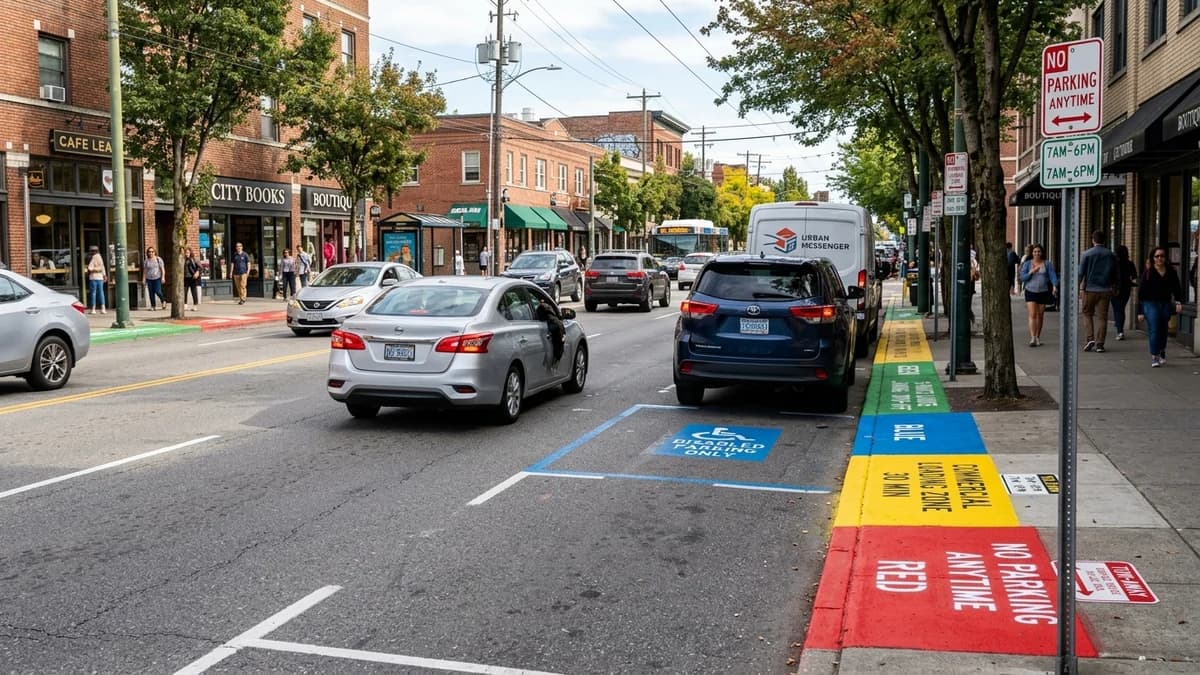
Curb Color Parking Rules: Red, Yellow, White, Green, and Blue Curbs Decoded
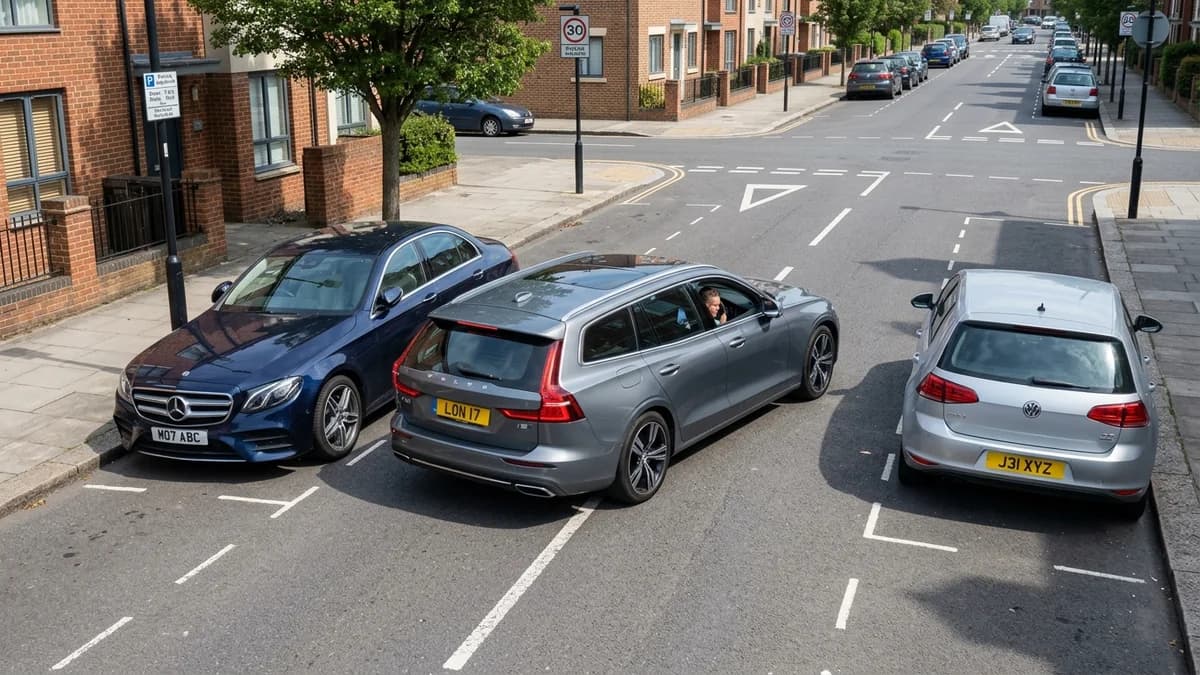
How to Parallel Park in 3 Easy Steps (A Foolproof Guide for the Driving Test)