California DMV Right-of-Way Rules Permit Practice Test 2026
Master California's right-of-way rules for intersections, roundabouts, and pedestrians with 25 challenging practice questions. Right-of-way errors cause thousands of accidents yearly and make up about 25% of the California DMV permit test.
Updated for July 2026
This practice test is up to date as of July 2026. The 25 questions on this practice test are based on California's official 2026 California DMV Driver's Handbook and the California Vehicle Code.
Understanding California's right-of-way rules is crucial for passing your permit test—and for staying safe on the road. Right-of-way questions make up approximately 25% of the California DMV permit test, making this one of the most heavily tested topics.
This free practice test covers the right-of-way scenarios you'll face on the actual DMV exam. The questions are intentionally challenging because these topics are frequently tested. You'll learn about 4-way stops, uncontrolled intersections, roundabout entry rules, pedestrian crosswalk laws, emergency vehicle procedures, and school bus regulations.
Expect questions about: who goes first at a 4-way stop when vehicles arrive simultaneously, what to do at uncontrolled intersections, how to navigate roundabouts safely, when you must yield to pedestrians, California's Move-Over law for emergency vehicles, and school bus stopping requirements. These aren't just hypothetical scenarios—they're real California laws you need to know.
Why is this on the California Permit Test?
The California DMV considers "Failure to Yield" one of the most dangerous driving behaviors. Because of this, you will see multiple questions testing your judgment in complex scenarios. You must master:
- 4-way stop precedence
- Uncontrolled intersections
- Roundabout entry rules
- Pedestrian crosswalk laws
Intersections & 4-Way Stops
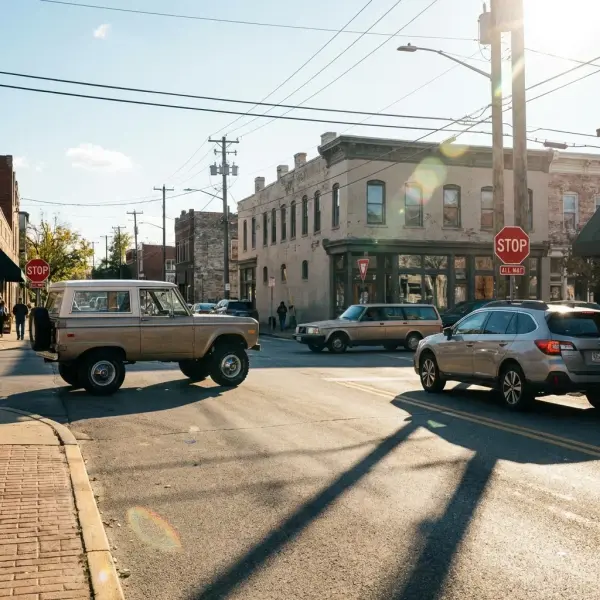
Confusion at intersections is dangerous. The golden rule at a 4-way stop is simple: First to stop, first to go. If two vehicles arrive at the same time, the vehicle on the right has the right-of-way.
DMV Test Tip: Left Turns
A very common test question asks: "You want to turn left at an intersection. The light is green but there is oncoming traffic."
Answer: You must wait in the intersection until oncoming traffic clears. Left turners must ALWAYS yield to oncoming straight traffic (unless you have a protected green arrow).
Other Key Rules
- • T-Intersections: Traffic on the through road has the right-of-way. Vehicles on the road ending must yield.
- • Uncontrolled Intersections: Yield to vehicle on your right.
- • Private Roads/Driveways: Yield to all traffic on the main road.
Roundabouts & Merging
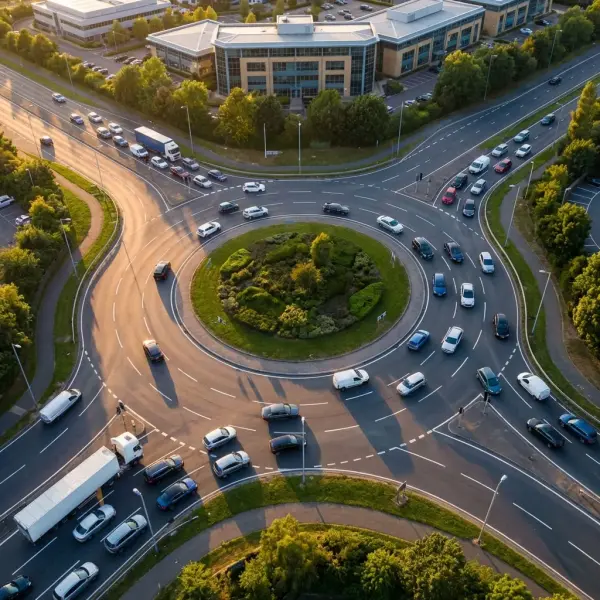
Roundabouts are designed to keep traffic flowing. The rule is strictly Yield on Entry. Traffic already inside the circle always has the right-of-way over vehicles entering. You must travel in a counter-clockwise direction.
Safety Critical
Never stop inside a roundabout to let someone in. This causes accidents and defeats the purpose of the roundabout.
Exam Alert: Merging
When merging onto a highway or freeway, you must enter at or near the speed of traffic. It is YOUR responsibility to find a gap. Do not stop in the acceleration lane unless absolutely necessary.
Pedestrians are Priority
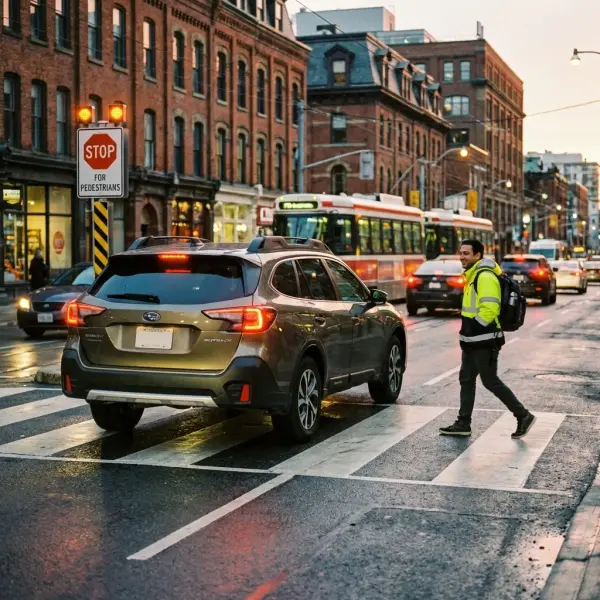
Pedestrians are the most vulnerable road users. You must yield to pedestrians in marked and unmarked crosswalks at every intersection.
"When in doubt, yield. Even if a pedestrian is jaywalking (crossing illegally), you must stop to prevent an injury. Taking the right-of-way from a pedestrian is illegal."
Blind Pedestrians
Pedestrians using guide dogs or white canes (with or without a red tip) must be given the right-of-way at all times. Stop well back from the crosswalk so the vehicle noise does not distract the service animal.
Emergency Vehicles & School Buses
Emergency Vehicles
When you see lights or hear sirens, you must pull to the right and stop. This is a law, not a suggestion.
- • Intersection: If inside, clear it first, then pull over. Never stop in the intersection.
- • Move Over Law: When passing a stopped emergency vehicle, move over one lane or slow down significantly.
School Buses
Flashing red lights mean STOP.
Test Your Knowledge
These 25 questions mimic the real exam's "Right of Way" section. Can you score the passing 83%?
At a 4-way stop, two vehicles arrive at the intersection at the same time. Who has the right-of-way?
Questions are created and maintained by the DMV Question Bank content team following a rigorous editorial process. Content is updated regularly to reflect the latest state Driver Handbooks and traffic laws. Official sources include state Driver Handbooks, DMV websites, and the Uniform Vehicle Code.
Frequently Asked Questions
Who has the right-of-way at a 4-way stop in California?
Do pedestrians always have the right-of-way in California?
Who yields at a California roundabout?
When must I stop for a school bus in California?
What is California's Move-Over law?
Who goes first at an uncontrolled intersection in California?
What should I do when an emergency vehicle approaches in California?
Can I turn left on a green light with oncoming traffic in California?
Ready for the actual Exam?
Right-of-way is just one section. Get your California-specific premium study pack with pass guarantee.