Master Signs & Signals
The complete guide to road signs, traffic signals, and pavement markings. About 30% of your DMV test covers this topic.
Why Signs & Signals Dominate the Test
Signs and signals are the universal language of the road. Expect 8-12 questions on sign identification and 3-5 on signals/markings.
- Sign shapes & colors
- Flashing light meanings
- Lane marking rules
- Work zone regulations
Sign Shapes: The Universal Language
You can identify a sign's meaning by its shape alone—even at night or in poor visibility. The DMV tests this because shape recognition is critical when you can't read the text.
Unique Shapes for Critical Actions
Some meanings are so important they have their own exclusive shape. The Octagon (8 sides) is used exclusively for STOP signs. If you see an octagon, you must stop, even if the text is obscured by snow or graffiti. The Inverted Triangle (pointing down) is used only for YIELD signs.
Pennant-shaped signs (sideways triangles pointing right) mark "No Passing Zones" and are always placed on the left side of the road to be visible to drivers attempting to pass.
Warning and School Signs
Diamond-shaped signs are the standard for warnings (hazards, road conditions). If you see a diamond, slow down.
A Pentagon (5 sides) shaped like a schoolhouse is used uniquely for School Zones and School Crossings. Whether yellow or fluorescent yellow-green, strictly obey posted speed limits and watch for children.
Railroad and Regulatory
Railroad crossings use two specific shapes: a Round Yellow Sign (advance warning) and a Crossbuck (X-shape) (at the tracks).
Most other rules are conveyed on Rectangles. Vertical rectangles are for regulatory rules (Speed Limit, No Parking), while horizontal rectangles are generally for guide information (Exit signs, Mile markers).
DMV Test Tip
Expect 2-3 questions asking "What shape is a _____ sign?" The round sign (railroad) and pennant (no passing) are most commonly missed.
Sign Colors: Instant Category Recognition
Colors group signs by purpose. Learn these and you'll know what category any sign belongs to instantly.
Traffic Control Colors
Red is the color of authority. It is reserved for the most critical signs: Stop, Yield, Do Not Enter, and Wrong Way. If you see red, it always means a prohibition or a mandatory stop.
White and Black are used for regulatory signs. These tell you the rules of the road, such as Speed Limits, Lane Use controls, and Parking restrictions. They are enforceable by law.
Warning Colors
Yellow is the standard color for general warnings. It warns of hazards like curves, intersections, or slippery roads.
Fluorescent Yellow-Green is a unique high-visibility color used specifically for School Zones, Pedestrian crossings, and Bicycle crossings. Orange is used exclusively for Work Zones and construction areas; remember that fines are usually doubled in orange zones.
Guide and Information Colors
Green signs offer directional guidance—distances to cities, exit numbers, and mile markers.
Blue signs indicate motorist services. Look for blue signs to find rest areas, hospitals, gas stations, or lodging.
Brown signs point to public recreation and cultural interest areas, such as state parks, historic sites, or campgrounds.
🏛️ State Variation
Some states use fluorescent yellow-green for ALL school zone signs; others use standard yellow. Both are correct on the DMV test.
Printable Cheat Sheet Included
Get instant access to our high-quality, printable road signs cheat sheet. Perfect for studying on the go or quick revision before the test. Includes our complete Top US Road Signs guide to help you master essential signs.
Regulatory Signs: These Are the Law
Regulatory signs tell you what you MUST or MUST NOT do. Violating them = traffic ticket.
Stop, Yield, and Right of Way
These are the most critical signs on the road because they control the flow of traffic. The STOP sign is the only octagonal sign; it requires a complete cessation of movement. A "rolling stop" is a common failure point on driving tests. The YIELD sign is a red inverted triangle that instructs you to slow down and give the right-of-way to other traffic or pedestrians, stopping only if necessary.
Red signs with white lettering like DO NOT ENTER or WRONG WAY indicate you are driving against traffic—a severe safety violation. If you see these, you must pull over and turn around immediately when safe.
Speed Limits
Speed limit signs are always rectangular black-and-white signs. They indicate the maximum legal speed under ideal conditions. However, you must always adjust for weather and traffic.
You might also see yellow advisory speed signs near curves or ramps; these are suggested safe speeds, not legal limits, but ignoring them can cause accidents. Some highways also post minimum speed limits to prevent dangerously slow driving.
Lane Use and Turns
White signs often control lane usage. A Turn Only sign means you must turn in the direction of the arrow. A No U-Turn sign (a U-shaped arrow with a red slash) prohibits turning around at that intersection.
If you see a black diamond symbol on a white sign, that marks a High Occupancy Vehicle (HOV) lane. You can only use this lane if you have multiple passengers or a qualifying low-emission vehicle.
Parking Rules
Parking signs can be confusing, but the differences are specific. No Parking means you can stop briefly to load or unload passengers or merchandise. No Standing is stricter; you can stop to drop off passengers but cannot wait there. No Stopping is the strictest rule; you cannot stop your car for any reason unless avoiding a collision or obeying a traffic officer.
Warning Signs: Hazards Ahead
Yellow diamond = danger ahead. These don't mandate action, but they warn you to prepare.
Road Conditions
Warning signs are almost always yellow diamonds with black markings. They alert you to changes in the road layout, such as curves or winding roads. When you see these, you should slow down. Some signs warn of physical hazards like steep hills (trucks must use lower gears) or "Slippery When Wet" conditions.
Intersections and Merges
Intersections are high-risk areas, so look for yellow signs indicating specific layouts like a T-intersection, Y-intersection, or a "Plus" sign for a standard crossover.
Merge signs are particularly important; they show you which lane is ending or where traffic will be entering your flow. Always adjust your speed to let merging traffic in safely.
Pedestrians and Hazards
Special warning signs indicate where you are likely to encounter non-vehicles. A yellow or fluorescent yellow-green pentagon marks a School Zone. You must slow down and watch for children. A diamond sign with a walking person indicates a pedestrian crossing.
In rural areas, animal crossing signs (like deer or cattle) warn you to be vigilant, especially at dawn and dusk when these animals are most active.
Railroad Crossings
Railroad crossings are unique. You will see a round yellow sign with an "RX" symbol as an advance warning before you reach the tracks. At the tracks themselves, look for the "Crossbuck" (an X-shaped white sign), which acts exactly like a Yield sign. If lights are flashing, you must stop.
Exam Alert
The round yellow railroad advance warning sign is the ONLY round warning sign. This is a favorite test question.
Traffic Signals: Lights & Arrows
The lights you encounter daily—but the test asks tricky questions about flashing lights and arrows.
Standard Traffic Lights
Red Light: You must come to a complete stop. You can make a right turn on red after stopping, unless a sign says otherwise. In rare cases (like turning from a one-way street onto another one-way street), a left on red may be legal.
Yellow Light: CAUTION. The light is about to turn red. You should stop if you can do so safely. Never speed up to "beat" a yellow light.
Green Light: GO. However, green does not guarantee a safe path; you must still yield to any vehicles or pedestrians already in the intersection.
Flashing Lights and Arrows
A Flashing Red Light is legally equivalent to a STOP sign. You must stop completely, check for safety, and then proceed. A Flashing Yellow Light means "Proceed with Caution"—you do not need to stop, but you should slow down and be alert.
Arrows control turns. A Green Arrow is a "protected turn," meaning oncoming traffic is stopped for you. A Red Arrow prohibits turning in that direction entirely. A Flashing Yellow Arrow means you can turn, but it is unprotected—you must yield to oncoming traffic first.
Road Markings: Lines & Symbols
The painted lines on the road surface. Master one simple rule: Yellow = opposite direction traffic. White = same direction traffic.
Yellow vs. White Lines
The color of the line tells you the direction of traffic. Yellow lines separate traffic moving in opposite directions (like a two-way street). If the yellow line is on your left, you are on the correct side of the road. White lines separate lanes of traffic moving in the same direction (like on a highway) or mark the right edge of the road.
As for the style of the line:
- Broken Lines: You may cross this line to pass or change lanes if it is safe.
- Solid Lines: You should stay in your lane. Passing or changing lanes is discouraged or hazardous.
- Double Solid Lines: Strictly prohibited. You cannot cross these lines to pass.
Special Symbols
Stop Lines are thick white bars painted across the road at intersections; you must stop behind this line, not on top of it. Yield Triangles ("shark teeth") indicate you must yield to other traffic.
If you see a Diamond Symbol in a lane, that is restricted for High Occupancy Vehicles (HOV), buses, or bikes. Do not drive there unless you qualify. A Bike Lane marked with a bicycle symbol is exclusively for cyclists; do not drive or park in it unless turning.
Work Zones: Orange = Caution
Orange signs mark construction and work zones. Fines are doubled (sometimes tripled) and workers are at risk. Take these seriously.
Construction Zone Safety
Work zones are dangerous areas marked by orange signs. The most common signs are "Road Work Ahead," "Lane Closed," or "Flagger Ahead." In these zones, you must slow down and be prepared to stop. Fines for moving violations (like speeding) are often doubled or even tripled in work zones.
If you see a worker holding a flag or a paddle, their instructions overrule any other traffic signs or signals. If they tell you to stop, you must stop.
Test Your Knowledge
20 mixed questions covering shapes, colors, signals, and markings.
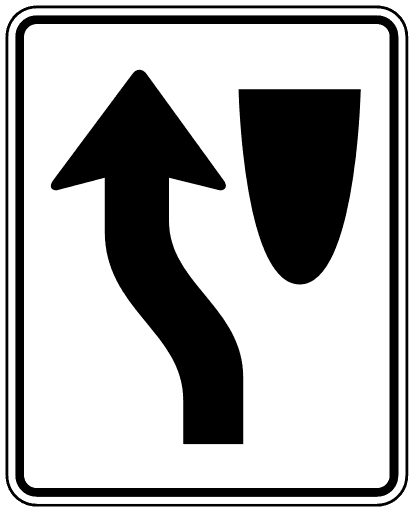
What does this sign indicate?
Questions compiled from official DMV handbooks and MUTCD standards.
Frequently Asked Questions
How many sign & signal questions are on the permit test?
What's the difference between flashing red and flashing yellow lights?
Are sign shapes really tested?
What does a solid yellow line on my side mean?
What's the difference between warning and regulatory signs?
Are fines really doubled in work zones?
Learn other concepts
Right-of-Way Rules
Understand who goes first at intersections, roundabouts, and special situations. The most commonly missed topic on the test.
Safe Driving
Defensive driving, weather conditions, and emergency maneuvers. Learn how to survive on the road and handle hazards.
Alcohol & Drugs
Understand BAC limits, zero-tolerance laws, and the severe consequences of impaired driving. Critical for safety and the test.
Ready for the Real Test?
Don't lose easy points on road signs. Get our premium state-specific study packs to guarantee you pass.