Texas DPS Right-of-Way Rules Permit Practice Test 2026
Master Texas's right-of-way rules for intersections, roundabouts, and pedestrians with 25 challenging practice questions. Right-of-way errors are a leading cause of crashes across Texas and make up about 25% of the DPS written knowledge test.
Updated for July 2026
This practice test is up to date as of July 2026. All 25 questions are based on Texas's official 2026 Texas Driver Handbook and the Texas Transportation Code (TTC Title 7).
Understanding Texas's right-of-way rules is essential for passing the DPS knowledge test — and for staying safe on Texas roads. Right-of-way questions appear consistently on the exam, making this one of the most heavily tested topics.
This free practice test covers every right-of-way scenario you'll face on the actual DPS exam. The questions are intentionally challenging because these topics are frequently tested. You'll learn about 4-way stops, uncontrolled intersections, roundabout entry rules, pedestrian crosswalk laws, emergency vehicle procedures, and school bus regulations as defined by Texas Transportation Code §545.
Expect questions about: who goes first at a 4-way stop when vehicles arrive simultaneously, what to do at uncontrolled intersections, how to navigate roundabouts safely, when you must yield to pedestrians, Texas's Move Over law for emergency vehicles, and school bus stopping requirements. These are real Texas laws you need to know.
Why is this on the Texas DPS Test?
The Texas DPS considers "Failure to Yield" one of the most dangerous driving behaviors. Texas consistently ranks among the top states for traffic fatalities, making right-of-way knowledge critical. You must master:
- 4-way stop precedence
- Uncontrolled intersections
- Roundabout entry rules
- Pedestrian crosswalk laws
Intersections & 4-Way Stops
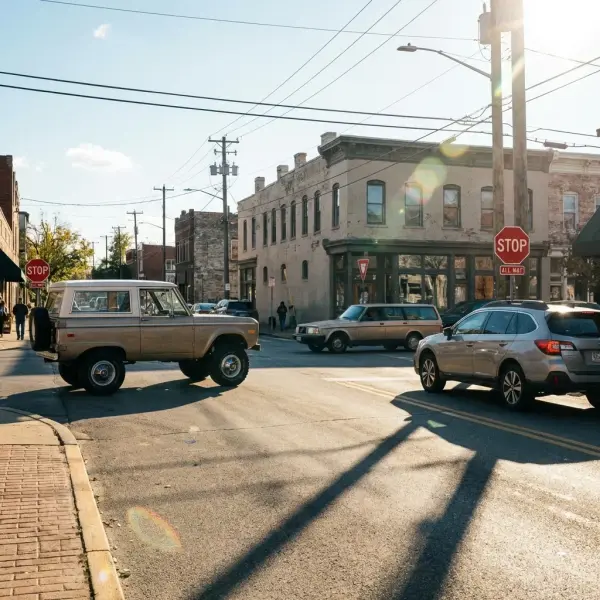
Under Texas Transportation Code §545.153, the golden rule at a 4-way stop is clear: First to stop, first to go. If two vehicles arrive at the same time, the vehicle on the right has the right-of-way. Texas law requires all vehicles to come to a complete stop before proceeding.
DPS Test Tip: Left Turns
A common test question: "You want to turn left at an intersection. The light is green but oncoming traffic is approaching."
Answer: Under §545.152, you must yield to oncoming traffic before completing the turn. You may enter the intersection to wait, but must not complete the turn until it is clear. A protected green arrow is the only exception.
Other Key Texas Rules
- • T-Intersections: Traffic on the through road has the right-of-way. Vehicles on the road ending must yield (§545.151).
- • Uncontrolled Intersections: Yield to vehicle already in the intersection, then to vehicle on right (§545.151).
- • Private Roads/Driveways: Yield to all traffic and pedestrians on the public road before entering (§545.155).
Roundabouts & Merging
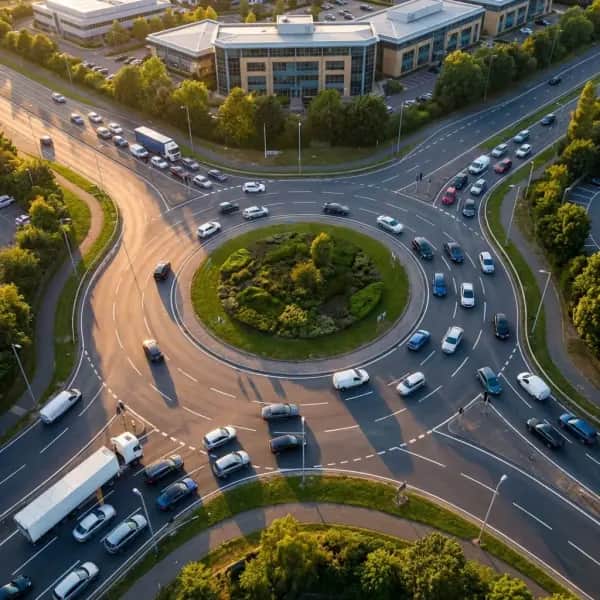
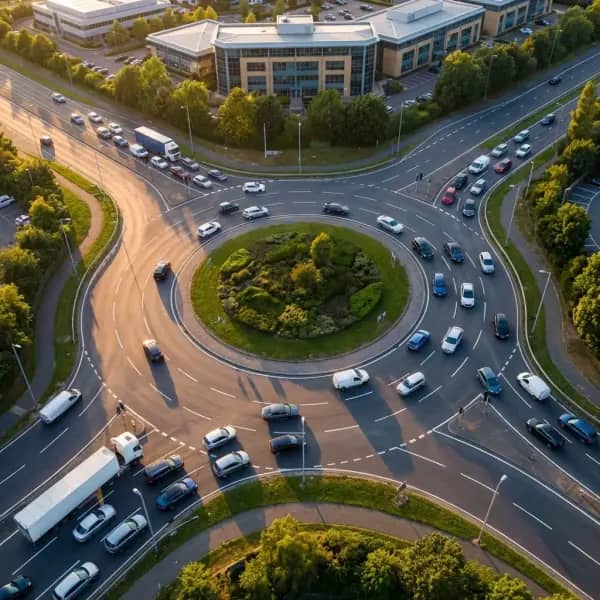
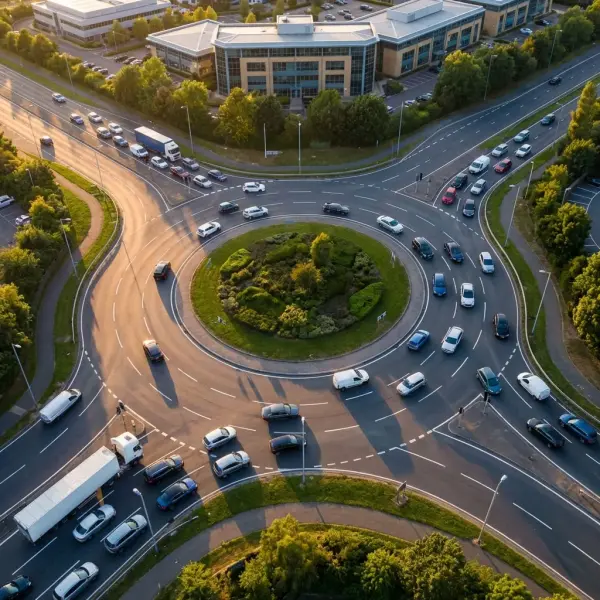
Texas has expanded its use of roundabouts across the state as TxDOT data shows they reduce fatal crashes by up to 82% compared to traditional intersections. The rule is strictly Yield on Entry. Traffic already inside the circle always has the right-of-way. Travel counter-clockwise and signal when exiting.
Safety Critical
Never stop inside a Texas roundabout to let someone enter. This causes accidents and defeats the roundabout's purpose. If you miss your exit, continue around and exit on the next pass.
Exam Alert: Highway & Freeway Merging
When entering a Texas highway, you must accelerate to match the speed of traffic. Drivers already on the highway have the right-of-way. Do not stop in the acceleration lane — this is dangerous and a common cause of rear-end crashes in Texas.
Pedestrians are Priority
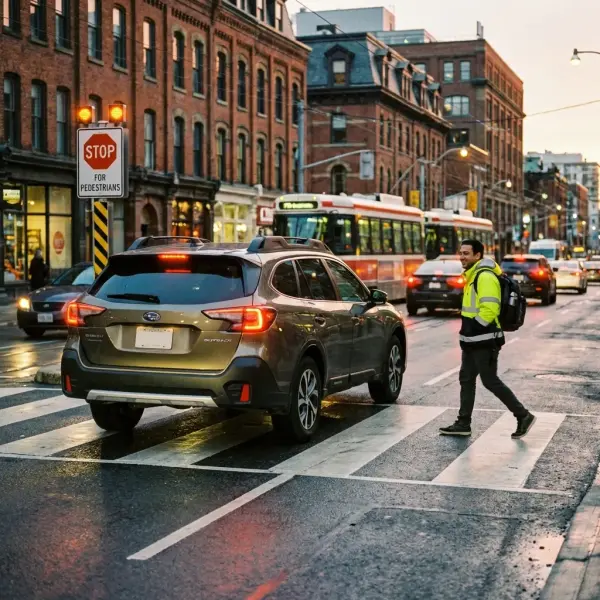
Texas Transportation Code §552.003 requires drivers to yield to pedestrians at all marked crosswalks. Texas law also recognizes implied crosswalks at every intersection — even where no lines are painted — and requires drivers to exercise due care for pedestrian safety.
"When in doubt, yield. Texas law requires you to exercise due care to avoid colliding with a pedestrian regardless of where they are crossing. Even a jaywalking pedestrian has a right not to be struck."
Blind Pedestrians (§552.009)
Texas law gives the highest level of protection to pedestrians using white canes or guide dogs. You must stop your vehicle and yield the entire roadway until the pedestrian has safely reached the sidewalk. Violations carry fines of up to $500 in Texas.
Emergency Vehicles & School Buses
Emergency Vehicles (§545.156)
When you see lights or hear sirens, you must pull to the right and stop. Texas law (§545.156) is explicit — this is a mandatory requirement, not a courtesy.
- • Intersection: Clear the intersection first, then pull to the right and stop. Never stop inside an intersection.
- • Texas Move Over Law (§545.157): When passing a stopped emergency or authorized vehicle on the roadside, move over one lane or slow to 20 mph below the posted speed limit. First violation: up to $200. If the violation causes damage or injury, penalties increase significantly.
School Buses (§545.066)
Flashing red lights mean STOP.
Test Your Knowledge
These 25 questions mimic the real Texas DPS exam's "Right of Way" section. Can you score the passing 70%?
At a 4-way stop, two vehicles arrive at the intersection at the same time. Who has the right-of-way?
Questions are created and maintained by the DMV Question Bank content team following a rigorous editorial process. Content is updated regularly to reflect the latest Texas Driver Handbook and the Texas Transportation Code (TTC Title 7, Chapter 545).
Frequently Asked Questions
Who has the right-of-way at a 4-way stop in Texas?
Do pedestrians always have the right-of-way in Texas?
Who yields at a Texas roundabout?
When must I stop for a school bus in Texas?
What is Texas's Move Over law?
Who goes first at an uncontrolled intersection in Texas?
What should I do when an emergency vehicle approaches in Texas?
Can I turn left on a green light with oncoming traffic in Texas?
Ready for the Actual Exam?
Right-of-way is just one section. Get your Texas-specific premium study pack with a pass guarantee.