Master Fines & Limits
Questions about speed limits, fines, and point systems make up about 10% of the written permit test. Learn the rules that will keep you safe and help you pass.
Why is this on the Permit Test?
The DMV wants to ensure you understand the consequences of unsafe driving *before* you get behind the wheel. On your written exam, you will likely encounter 3-5 questions specifically asking about:
- Speed limits in specific zones
- The “Basic Speed Law” definition
- Penalties for DUI/DWI
- School zone & blind intersection rules
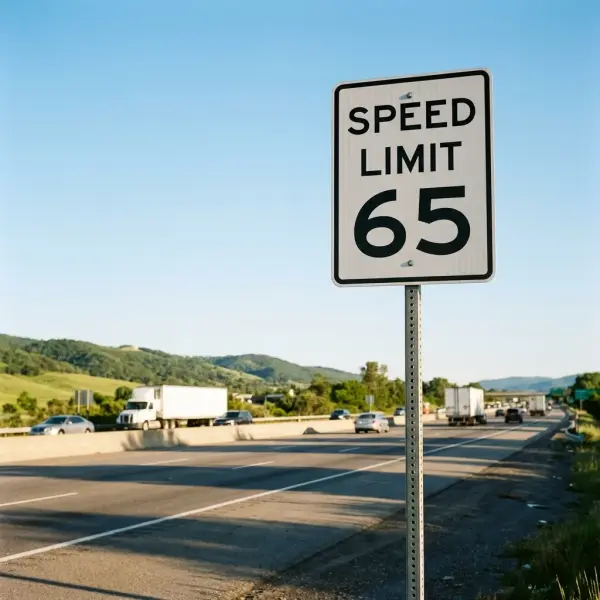
Speed Limits Across the US
Speed limits vary by zone type and state. Unless otherwise posted, most states set “prima facie” (default) limits that apply even when no sign is visible. Driving above these defaults is automatically presumed unsafe.
| Zone | Limit |
|---|---|
| Residential district | 25 mph |
| School zone (children present) | 25 mph |
| Business district | 25–30 mph |
| Alley | 15 mph |
| Blind intersection (no view 100 ft) | 15 mph |
| Rural / undivided highway | 55 mph |
| Highway / freeway | 55–85 mph |
Maximum Highway Limits by State
Highway maximums range from 60 mph in Hawaii to 85 mph on a Texas toll road. Most western states allow 70–80 mph; most eastern states cap at 65 mph.
DMV Test Tip: The Basic Speed Law
You may never drive faster than is safe for current conditions, regardless of the posted limit. If it’s foggy, raining, or traffic is heavy, driving at the posted 65 mph may be illegal because it is unsafe.
When No Limit Is Posted
If there is no speed limit sign, you must follow the default (prima facie) limits for that type of area. The burden is on you to recognize which zone you are in.
Minimum Speed & Impeding Traffic
Driving too slowly can be just as dangerous as speeding. On freeways, you must not drive so slowly that you impede the normal flow of traffic. Some freeways post minimum speed limits (often 40–45 mph). If you must drive slowly due to vehicle trouble, use hazard lights and stay in the far-right lane.
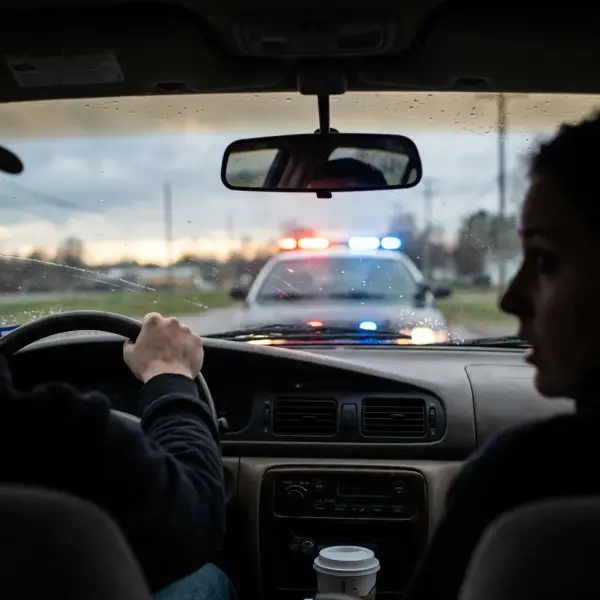
Fines & Penalties
A traffic ticket is more expensive than the number printed on the citation. Your total cost is: base fine + court fees + penalty assessments. State “penalty assessment” multipliers can make a $100 base fine cost $400+ out of pocket.
Speeding Fine Tiers (Base Fine)
| Over Limit | Base Fine |
|---|---|
| 1–10 mph over | $35–$100 |
| 11–20 mph over | $70–$200 |
| 21–30 mph over | $100–$400 |
| 30+ mph over | $200–$500+ |
Total out-of-pocket cost is typically 3–5x the base fine after penalty assessments. Ranges vary by state.
Construction Zone Double Fines
Fines are doubled in construction / work zones when workers are present. Some states double fines for signage-only zones as well. A $100 ticket becomes $200+ before fees.
School Zone & School Bus Violations
Speeding in a school zone carries enhanced fines (often $250+). Passing a stopped school bus with flashing red lights can result in a fine of $150–$1,000+ and possible license suspension.
Exception: You are not required to stop for a school bus on the opposite side of a road divided by a physical barrier (e.g., concrete median). A painted center line alone is not a divider.
Other Common Violation Fines
| Running a red light / stop sign | $100–$500 |
| Reckless driving | $145–$1,000+ |
| Seatbelt violation | $20–$200 |
| Handheld cell phone / texting | $75–$500 |
| Pedestrian right-of-way violation | $100–$500 |
| Hit-and-run (property damage) | $200–$1,000 |
| Hit-and-run (injury/death) | Felony — jail + fines |
Fine amounts are general ranges. Always check your state’s driver handbook for exact figures.
The Point System
Most states track your driving behavior with a point system. Each traffic conviction adds points to your record. Too many points trigger escalating consequences.
| Violation | Points |
|---|---|
| Speeding (1–15 mph over) | 1–2 |
| Speeding (16–25 mph over) | 3–4 |
| Speeding (26+ mph over) | 4–6 |
| Running red light / stop sign | 2–3 |
| Improper lane change / unsafe turn | 1–2 |
| At-fault accident | 1–3 |
| Reckless driving | 4–6 |
| DUI / DWI | 6–8+ |
| Hit-and-run | 6–8+ |
Thresholds & Consequences
As points accumulate, penalties escalate: a warning letter at 2–3 points, mandatory traffic school at 4–5, license suspension at 6–7, and revocation or probation at 8+ points. Exact thresholds and timeframes vary by state.
Points on your record also directly increase insurance premiums. A single speeding ticket can raise rates by 20–30%. A DUI can double or triple your premiums for 3–5 years.
How to Reduce Points
- Traffic school / defensive driving course: Most states let you mask 1 point by completing an approved course (typically once every 12–18 months).
- Clean record over time: Points expire after 1–3 years depending on your state.
- Good driver credit: Some states proactively remove a point after 12 consecutive clean months.
Note: Kansas, Louisiana, Minnesota, Mississippi, Oregon, Rhode Island, Washington, and Wyoming do not use a point system. Instead, they track violations directly and suspend licenses based on the number and severity of offenses.
DUI / DWI Laws
Driving Under the Influence is one of the most heavily tested topics on the permit exam. Expect at least 1–2 questions on BAC limits, implied consent, and penalties.
BAC Limits
| Driver Type | BAC Limit |
|---|---|
| Standard (21+ non-commercial) | 0.08% |
| Commercial vehicle operators | 0.04% |
| Under 21 (Zero Tolerance) | 0.00–0.02% |
Utah has the lowest standard limit in the country at 0.05% (effective since 2018).
Implied Consent
By driving on public roads, you have already “consented” to submit to a chemical test (breath, blood, or urine) if an officer has reasonable cause to suspect DUI. Refusing the test results in an automatic license suspension (typically 1 year for a first refusal) — even if you are later found not guilty.
First DUI Offense — Typical Consequences
- License suspension: 4–6 months
- Fines: $1,000–$2,500+ (including fees)
- Possible jail time: 48 hours – 6 months
- Mandatory DUI education program
- Possible ignition interlock device (IID)
- Significant insurance rate increase (SR-22 required in many states)
Repeat Offense Escalation
Penalties escalate sharply with each subsequent conviction:
- 2nd offense: Longer suspension (1–2 years), higher fines, mandatory jail time, IID required
- 3rd offense: Often charged as a felony, multi-year or permanent revocation, extended jail/prison sentence
- DUI with injury: Felony charges regardless of prior record, potential state prison time
DMV Test Tip: Drug-Impaired Driving
DUI laws apply to all impairing substances — not just alcohol. This includes marijuana (even in legal states), prescription medications that cause drowsiness, and illegal drugs. Any detectable impairment can result in a DUI charge.
Learner’s Permit & Graduated Driver Licensing
New drivers go through the Graduated Driver Licensing (GDL) system, which eases you into full driving privileges in three stages.
The Three GDL Phases
| Phase | Key Rules |
|---|---|
| 1. Learner’s Permit | Must drive with a licensed adult (21+) at all times. Hold for 6–12 months. Log 40–50 supervised hours. |
| 2. Provisional License | May drive unsupervised with restrictions: passenger limits (often 1 non-family teen), nighttime curfew (typically 11 PM – 5 AM), zero tolerance for violations. |
| 3. Full License | All restrictions lifted after maintaining a clean record through the provisional period (usually age 18 or 12+ clean months). |
Cell Phone Prohibition
Learner’s permit and provisional license holders are prohibited from all cell phone use while driving in most states — including hands-free. This is stricter than the rules for fully licensed adults.
Violation Penalties for New Drivers
Violating GDL restrictions can result in an extended permit period, delayed progression to the next phase, fines, or suspension. Some states reset the clock entirely — the 6- or 12-month clean-driving requirement starts over from the date of the violation.
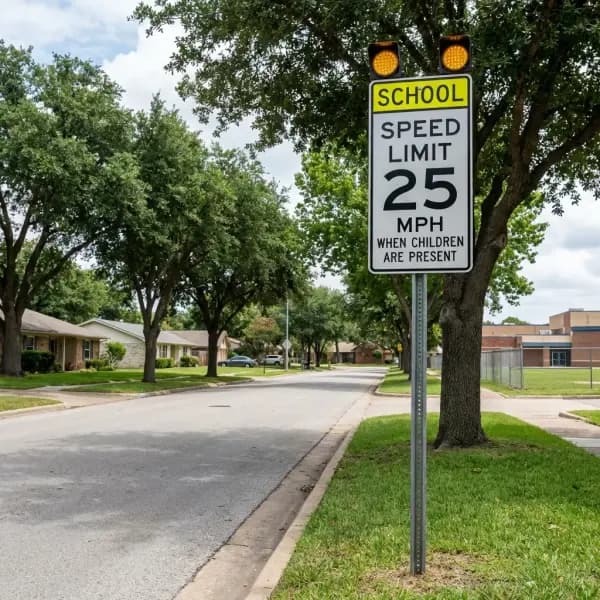
Special Zones & Situations
Certain areas and situations carry enhanced rules and penalties. The DMV permit test frequently asks about school buses, emergency vehicles, and railroad crossings.
Construction Zones
Fines are doubled (or more) in active construction zones. Some states impose triple fines if workers are present. Speeding through a work zone can also carry additional points and possible jail time.
School Zones
School zone speed limits are typically active during posted hours (usually 30 minutes before and after school) or when children are present. Many jurisdictions use speed cameras for enforcement. Fines are significantly higher than standard speeding tickets.
School Bus Stopping Rules
- Flashing red lights + stop arm: ALL traffic in BOTH directions must stop.
- Divided highway exception: If the road has a physical barrier (raised median, unpaved strip), oncoming traffic does not need to stop.
- Multi-lane road (no barrier): All lanes in both directions must stop.
- Penalty: $150–$1,000+ fine, possible license suspension, points on record.
Emergency Vehicles & Move-Over Laws
When an emergency vehicle approaches with lights/sirens, pull to the right edge of the road and stop. All 50 states have “Move Over” laws: when passing a stopped emergency vehicle, tow truck, or utility vehicle on the roadside, you must move over one lane or slow down significantly. Fines range from $50 to $2,500.
Railroad Crossings
When warning signals activate, you must stop at least 15 feet from the nearest rail. Never drive around lowered gates. Buses and vehicles carrying hazardous materials must always stop at railroad crossings regardless of signals.
Pedestrian & Crosswalk Rules
Pedestrians have the right-of-way in marked and unmarked crosswalks (any intersection). You must yield to blind pedestrians carrying a white cane or using a guide dog at all times — this is a common test question.
Never pass another vehicle that has stopped for a pedestrian at a crosswalk.
Funeral Processions
In most states, funeral processions have the right-of-way and may proceed through red lights after the lead vehicle legally enters the intersection. Do not cut into or interrupt a procession.
What Happens After a Ticket
Getting a ticket doesn’t mean you have no options. You generally have three choices: pay the fine, attend traffic school, or contest the ticket.
Option 1: Pay the Fine
Paying is an admission of guilt. The violation goes on your record, points are added, and your insurance may increase.
Option 2: Traffic School
Attend an approved course to mask the point from your record. The fine is usually still owed, but your insurance stays unaffected.
Traffic school is generally available for minor moving violations and can typically be used once every 12–18 months. It is usually not available for DUI, reckless driving, or violations that caused injury.
Option 3: Contest the Ticket
- Trial by written declaration (mail): Submit your defense in writing. If denied, you can still request an in-person hearing.
- Court appearance: Appear before a judge. The citing officer must also appear; if they don’t, the case is often dismissed.
- Take photos of the scene, note conditions, and gather evidence that supports your case.
Warning: Failure to Pay
Ignoring a ticket leads to late fees, license suspension, a bench warrant for your arrest, collections on your credit report, and a vehicle registration hold.
Out-of-State Tickets
Most states participate in the Driver License Compact (DLC), an agreement to share traffic violation information. An out-of-state ticket will likely be reported to your home state and treated as if you received it locally — including points and insurance impact. Ignoring an out-of-state ticket can lead to license suspension in your home state.
Test Your Knowledge
These 25 questions are designed to mimic the style and difficulty of the actual DMV permit test. Can you score the passing 83%?
What is the maximum speed limit on most highways unless otherwise posted?
Questions are created and maintained by the DMV Question Bank content team following a rigorous editorial process. Content is updated regularly to reflect the latest state Driver Handbooks and traffic laws. Official sources include state Driver Handbooks, DMV websites, and the Uniform Vehicle Code.
Frequently Asked Questions
How much is a speeding ticket on average?
Do traffic fines double in construction zones?
What is the blood alcohol limit for drivers under 21?
Is it illegal to drive 5 mph over the speed limit?
What happens if I don't pay a traffic ticket?
Can I go to traffic school for a ticket?
How does the point system work?
What are the GDL phases for new drivers?
What is implied consent?
What should I do if I get a ticket in another state?
Learn other concepts
Signs & Signals
Master road signs, traffic lights, and pavement markings. The complete visual guide to understanding the road.
Right-of-Way Rules
Understand who goes first at intersections, roundabouts, and special situations. The most commonly missed topic on the test.
Safe Driving
Defensive driving, weather conditions, and emergency maneuvers. Learn how to survive on the road and handle hazards.
Ready for the actual Exam?
Fines and limits are just one section. Get your state-specific premium study pack with pass guarantee.