Illinois DMV Permit Practice Test 35 Questions 2026
Perfect for: Learner's permit applicants • First-time license applicants in Illinois
This practice test mirrors the exact format of the real IL DMV permit test: 35 multiple-choice questions, need 28/35 to pass (80%). Topics covered match the official 2026 Illinois SOS Driver Handbook.
How the IL DMV Permit Test Works
The Illinois knowledge test is administered in person at any Illinois SOS driver license office. Understanding the format helps you prepare effectively and avoid surprises on test day.
| Detail | SOS Requirement |
|---|---|
| Number of questions | 35 multiple-choice |
| Passing score | 28/35 (80%) |
| Questions you can miss | Up to 7 |
| Time limit | No time limit (take your time) |
| Test format | In-person at DMV offices or Online where eligible |
| Retake wait period | Can retake after 1 day if failed |
What the 35 Questions Cover
The SOS knowledge test draws questions from across the official Illinois Driver Handbook. Here is a breakdown of the topic areas and approximate number of questions in each category.
| Topic Area | Approx. Questions |
|---|---|
| Traffic laws & speed limits | ~9 questions |
| Road signs & signals | ~7 questions |
| Safe driving practices | ~5 questions |
| GDL rules & teen driving restrictions | ~5 questions |
| Alcohol & drug laws | ~5 questions |
| Right-of-way & parking rules | ~4 questions |
Study Tip
Focus on state-specific rules that differ from neighboring states — GDL ages, curfew times, BAC thresholds, and department-specific retake policies are frequently tested and easy to confuse.
IL DMV Permit Practice Test — 35 Questions
When parking uphill where there is no curb, which way should you turn your front wheels?
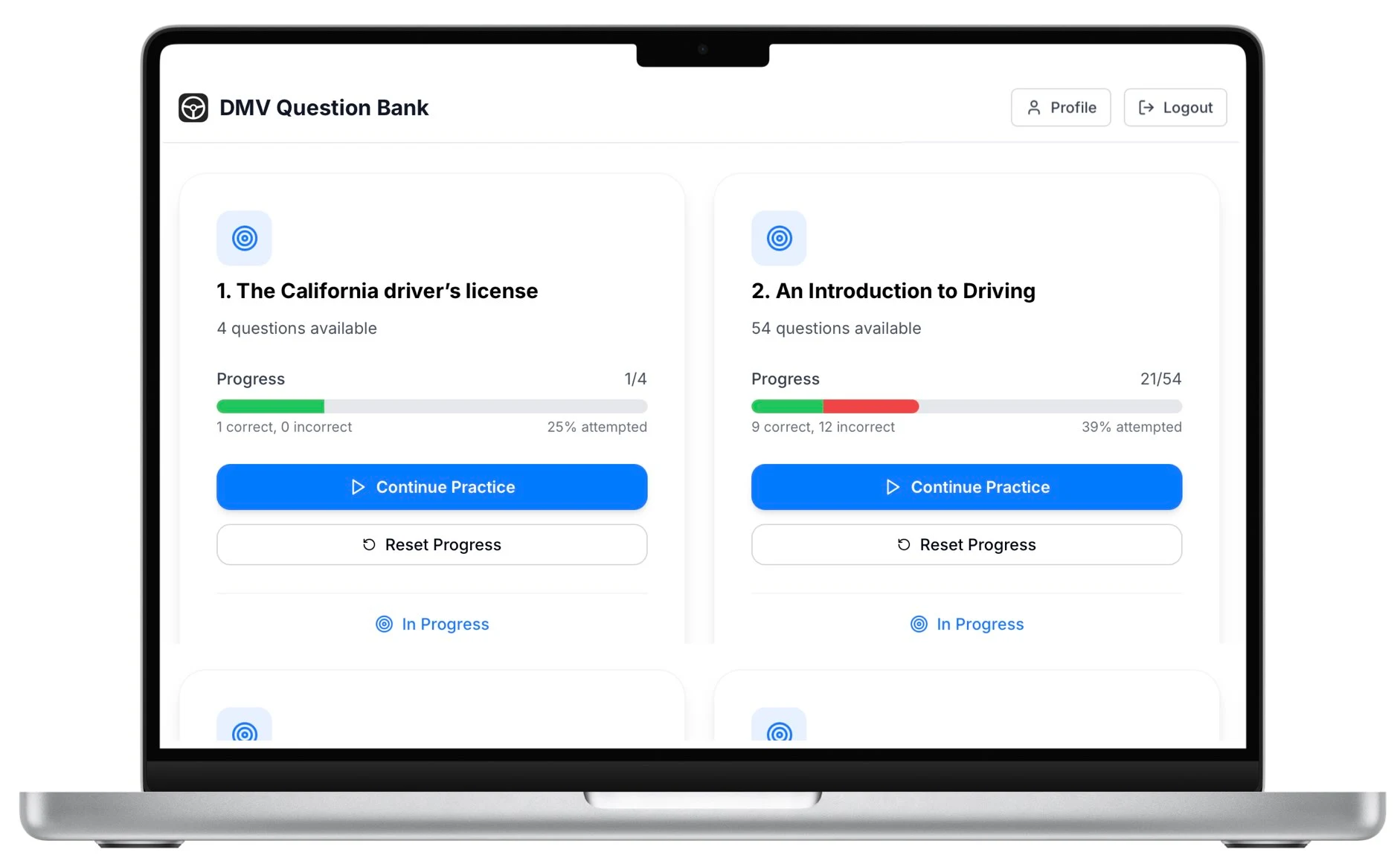
Pass your permit test on the first try
Unlock all 600+ state-specific questions, detailed explanations, and our Pass Guarantee.
Questions are created and maintained by the DMV Question Bank content team following a rigorous editorial process. Content is updated regularly to reflect the latest Illinois Driver Handbook and Illinois traffic laws.